Bulkhead Lights UK Guide : Marine, Industrial & Garage Lighting
Bulkhead lights represent industrial and marine lighting at its most practical—robust, weather-sealed fixtures designed for harsh environments where ordinary lights fail. Originally developed for ships and factories, these distinctive protected fixtures now bring authentic character to garages, utility rooms, coastal properties, and industrial-style interiors.
At Great Lighting, we specialise in quality traditional round or oval brass bulkhead lights handcrafted by Mullan Lighting in Ireland. Unlike mass-produced polycarbonate contractor bulkheads designed for temporary site lighting, our collection features authentic ship-specification fixtures built to last decades in challenging British weather.
This guide covers everything you need to choose bulkhead lights that perform reliably: understanding IP54 vs IP65 ratings for different applications, why brass bulkheads outlast plastic alternatives, selecting appropriate styles for various locations, and caring for quality fixtures ensuring lifetime performance.
Quick Answers: Bulkhead Lights
What are bulkhead lights? Protected light fixtures, traditionally round or oval, with weatherproof glass or polycarbonate covers, designed for exposed locations requiring robust illumination. Originally ship and factory lighting, now used for garages, utility areas, coastal properties, and industrial-style interiors.
IP54 or IP65 for bulkhead lights?
- IP54 bulkheads: Covered garages, utility rooms, sheds with roofs, protected industrial areas
- IP65 bulkheads: Fully exposed outdoor locations, marine environments, areas with pressure washing
- Quality matters: Brass IP54 bulkheads often outlast plastic IP65 through superior sealing and corrosion resistance
Why choose brass over plastic bulkheads?
- Longevity: Brass lasts 20+ years vs 3-5 years for polycarbonate
- Corrosion resistance: Essential for coastal and marine applications
- Authentic aesthetics: Real nautical/industrial character vs generic contractor appearance
- Sustainability: Repairable fixtures vs disposable plastic units
Where should I use bulkhead lights?
- Garages and workshops requiring robust lighting
- Utility rooms, boiler rooms, storage areas
- Coastal properties facing harsh weather
- Marine applications (boats, docks, harbours)
- Industrial-style interiors (lofts, conversions)
- Commercial spaces (warehouses, loading bays)
Outdoor Use, around the house or garden — Indoor Use in kitchens and bathrooms
How much do bulkhead lights cost?
- Plastic contractor bulkheads: £15-40 (3-5 year lifespan)
- Quality brass: £120-250 (20+ year lifespan)
- Cost per year: Quality bulkheads actually cheaper long-term: £6-12 annually vs £10-13 for replacing cheap units
What Are Bulkhead Lights?
Origins and Design Philosophy
Bulkhead lights emerged from maritime and industrial environments demanding reliable illumination in harsh conditions. Ships required fixtures withstanding salt water, constant vibration, and extreme weather. Factories needed robust lighting surviving dust, impact, and chemical exposure. The resulting designs prioritised protection, durability, and serviceability over aesthetics.
Defining characteristics:
- Protected covers: Glass or polycarbonate guards preventing impact damage
- Weather sealing: Gaskets and sealed construction protecting electrical components
- Robust mounting: Substantial fixings withstanding vibration and rough handling
- Serviceable design: Replaceable components rather than sealed disposable units
Modern bulkhead lights maintain these practical features whilst offering refined aesthetics suitable for residential applications.
How Bulkhead Lights Differ from Standard Outdoor Lights
Construction robustness: Bulkheads feature heavier-duty construction than decorative outdoor lights. Thicker metal bodies, substantial glass or polycarbonate guards, and reinforced mounting points withstand impacts and rough treatment standard fixtures cannot.
Protection priority: Whilst many outdoor lights achieve IP ratings through basic sealing, bulkheads are designed from the ground up for harsh environment protection. Every component considers water ingress, dust protection, and corrosion resistance.
Serviceability: Quality bulkheads allow component replacement—new gaskets, replacement glass, even bulb holder renewal. This contrasts with sealed units requiring complete replacement when components fail.
Aesthetic honesty: Bulkheads celebrate functional design rather than concealing protective features. Visible cage guards, prominent mounting hardware, and utilitarian forms become design elements rather than compromises.
Understanding IP Ratings for Bulkhead Lights
IP54 Bulkhead Lights: Protected Location Applications
IP54 rating breakdown:
- First digit (5): Dust protected—not dust-tight, but prevents harmful accumulation
- Second digit (4): Protected against water splashes from any direction
Perfect for:
- Covered garages: Under roof but exposed to dust, vehicle spray, occasional rain blown in
- Utility rooms and boiler rooms: Indoor locations with occasional moisture exposure
- Protected workshops: Covered industrial spaces with dust and basic moisture
- Under eaves or overhangs: Outdoor locations with overhead shelter
- Sheds and outbuildings: Covered structures without extreme exposure
Why IP54 often performs better than cheap IP65: Quality brass IP54 bulkheads with proper gaskets and superior metalwork frequently outlast budget plastic IP65 fixtures. The IP rating measures basic protection capabilities, not build quality or longevity. Well-constructed IP54 fixtures handle British weather exceptionally when positioned appropriately.
Our brass IP54 collection features authentic marine designs from Mullan Lighting. Each fixture hand-assembled in Ireland with traditional techniques ensuring reliable sealing and corrosion resistance beyond basic IP specification requirements.
IP65 Bulkhead Lights: Fully Exposed Applications
IP65 rating breakdown:
- First digit (6): Dust-tight—complete protection against dust ingress
- Second digit (5): Protected against water jets from any direction
Essential for:
- Fully exposed exterior walls: No overhead protection from weather
- Marine environments: Boats, docks, harbours, coastal properties with salt exposure
- Pressure washing areas: Commercial spaces where high-pressure cleaning occurs
- Industrial exteriors: Warehouses, loading bays, exposed industrial locations
- Completely unsheltered positions: Garden walls, boundary lighting, open pathways
Material considerations for IP65: In fully exposed applications, material quality becomes critical. Brass resists corrosion indefinitely. Polycarbonate and galvanised steel deteriorate within years in harsh or coastal conditions. The IP65 rating ensures immediate protection, but material choice determines long-term performance.
Our IP65 marine bulkheads use solid brass construction. Originally specified for actual ship installations, these fixtures handle the worst British coastal weather delivers.
Brass vs Plastic Bulkhead Lights: Quality Comparison
Material Properties and Longevity
Solid Brass Bulkheads (Our Recommendation):
Advantages:
- 20-30+ year lifespan: Brass doesn’t corrode, chip, or degrade in weather
- Coastal performance: Salt water creates protective patina rather than damaging metal
- Authentic aesthetics: Real nautical/industrial character developing rich patina
- Repairable construction: Replace gaskets, glass, and components indefinitely
- Sustainable choice: One fixture lasting decades vs multiple plastic replacements
- Property value: Quality brass fixtures appreciated by discerning buyers
Characteristics: Solid brass bulkheads develop natural patina over time—a desirable aged appearance valued for authentic character. In marine environments, this patina actually protects underlying metal. Brass can be polished to restore brightness or left to age naturally. Either approach maintains structural integrity indefinitely.
Weight and substance: Genuine brass bulkheads weigh substantially more than plastic alternatives. This weight indicates quality materials rather than hollow construction. Proper mounting supports heavier fixtures easily whilst providing secure, vibration-resistant installation.
Polycarbonate Contractor Bulkheads (Not Recommended):
Why they dominate the market:
- Initial cost: £15-40 vs £120-250 for solid brass
- Contractor preferences: Builders choose lowest-cost options for temporary site lighting
- DIY retailers: B&Q and Screwfix stock disposable fixtures meeting basic specifications
Why they’re poor long-term choices:
- 3-5 year lifespan before UV degradation, impact cracks, or seal failure
- Plastic yellowing: Polycarbonate discolours within 2-3 years
- Poor coastal performance: Salt accelerates plastic degradation
- Disposable design: Cannot repair—complete replacement required
- Generic appearance: Contractor aesthetic lacking character
- Higher lifetime cost: £15 bulkhead replaced every 4 years = £45 over 12 years vs £150 brass lasting 25+ years
Environmental impact: Each polycarbonate bulkhead generates plastic waste after 3-5 years. One brass bulkhead serving 25+ years eliminates 5-8 plastic units from landfills.
Cost Analysis: Brass vs Plastic Over Time
12-year cost comparison (typical garage application):
Plastic bulkhead scenario:
- Initial purchase: £25
- Replacement Year 4: £25
- Replacement Year 8: £25
- Replacement Year 12: £25
- Total cost: £100
- Annual cost: £8.33
- Plastic waste: 4 complete units
Brass bulkhead scenario:
- Initial purchase: £165
- Maintenance (Year 10): £15 (new gasket, bulb)
- Total cost: £180
- Annual cost: £15
- Expected remaining lifespan: 15+ additional years
- Waste: Zero
25-year calculation:
- Plastic: 6 replacements = £150 + hassle + environmental waste
- Brass: £165 initial + £30 maintenance = £195 total
- Annual cost advantage tips to brass after 15 years
This analysis excludes installation labour. Each plastic replacement requires electrician time (£60-100), whilst brass fixtures need mounting once. Including installation, brass becomes significantly more cost-effective after the first replacement cycle.
Bulkhead Light Styles and Applications
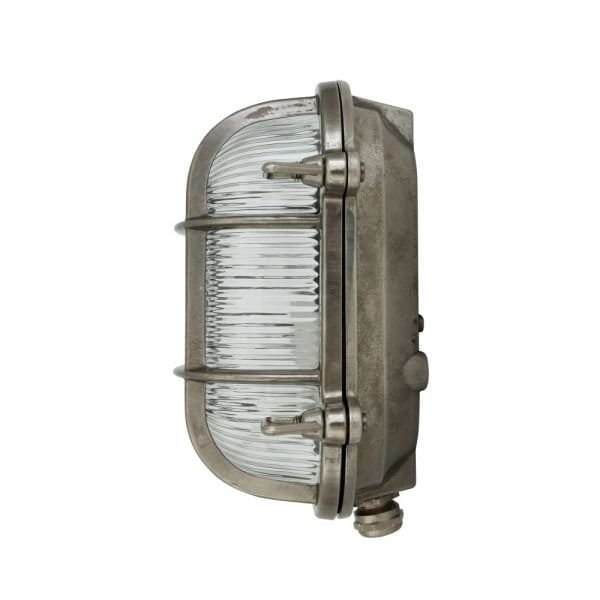
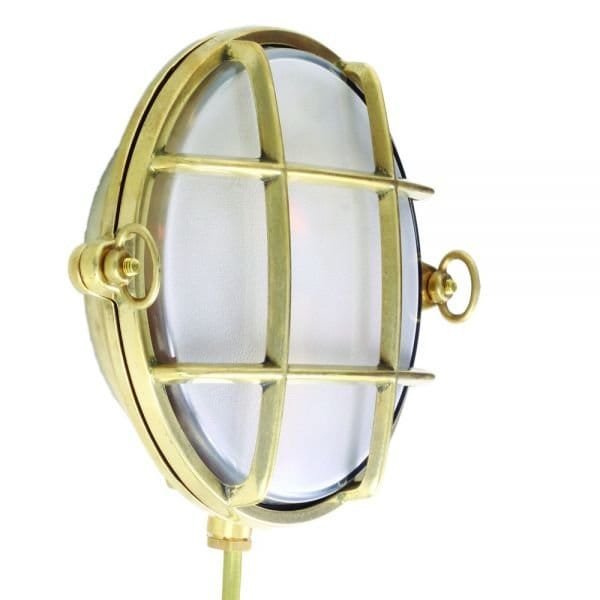
Marine and Nautical Bulkhead Lights
Authentic ship-specification bulkheads bring genuine maritime character to coastal properties, boat houses, and nautical-themed interiors.
Design characteristics:
- Heavy brass cage guards: Traditional protective grilles in substantial brass construction
- Threaded glass covers: Screw-on glass rather than clip fittings, ensuring reliable seal
- Mounting flanges: Substantial brass flanges with multiple mounting points
- Period-accurate detailing: Based on historical ship lighting specifications
Our marine bulkhead collection features designs from Mullan Lighting’s extensive nautical range. Each fixture manufactured to specifications proven on actual vessels, then refined for residential installation convenience.
Applications:
- Coastal properties: Front and rear entrances facing harsh weather
- Boat houses and docks: Lighting requiring salt-water resistance
- Nautical-themed interiors: Restaurant, pub, and residential nautical styling
- Garden lighting: Boundary walls, gate posts, garden features
- Listed buildings: Period properties requiring historically appropriate fixtures
Glass options:
- Clear glass: Traditional appearance, maximum light transmission
- Frosted/opal glass: Softens glare, creates gentle ambient glow
- Amber/tinted glass: Vintage appearance, warmer light colour
Browse our complete marine bulkhead collection.
Industrial and Factory-Style Bulkheads
Industrial bulkheads reference factory and warehouse lighting, bringing authentic work-space character to garages, workshops, and industrial-style interiors.
Design characteristics:
- Protective cages: Wire or solid guards preventing impact damage
- Exposed hardware: Visible bolts, mounting brackets, mechanical details
- Utilitarian forms: Function-first design celebrating industrial origins
- Weathered finishes: Aged brass, galvanised steel, raw metal appearances
Applications:
- Garages and workshops: Robust lighting withstanding rough treatment
- Industrial-style homes: Loft conversions, warehouse apartments, urban properties
- Commercial spaces: Cafés, gyms, retail spaces with industrial aesthetic
- Utility areas: Boiler rooms, storage areas, working spaces
Finish options:
- Aged brass: Industrial character with corrosion resistance
- Galvanised steel: Authentic industrial appearance
- Matte black: Contemporary industrial edge
- Raw aluminium: Modern industrial aesthetic
Contemporary Bulkhead Designs
Modern interpretations maintain bulkhead protection whilst offering clean-lined aesthetics suitable for contemporary architecture.
Design characteristics:
- Minimal detailing: Simplified forms without decorative elements
- Flush mounting: Low-profile designs sitting close to walls
- Integrated LEDs: Some models feature non-replaceable LED arrays
- Geometric shapes: Round, square, or rectangular forms with architectural presence
Applications:
- Modern homes: Contemporary properties requiring protected outdoor lighting
- Minimalist interiors: Clean aesthetics with practical protection
- New-build developments: Meeting building regulations with style
Bulkhead Lights by Location
Garage and Workshop Lighting
Garages demand robust lighting withstanding accidental impacts, vehicle vibration, temperature fluctuations, and occasional moisture exposure.
Recommended approach:
- IP54 bulkheads adequate for attached garages with overhead shelter
- Wall-mounted positions: 1.8-2.2m height distributing light evenly
- Spacing: One bulkhead per 8-10 square metres
- Bulbs: LED daylight (4000-5000K) for accurate colour rendering during mechanical work
Installation considerations:
- Position bulkheads where vehicle reversing won’t impact fixtures
- Avoid locations receiving direct door swing
- Consider cable routing avoiding vehicle lifts or door mechanisms
- Wire to dedicated circuit allowing garage lighting independence from house circuits
Our garage bulkhead recommendations: Industrial brass or aluminium designs in IP54 rating. These fixtures provide reliable illumination whilst withstanding workshop environment challenges. Cage-protected versions offer additional impact protection in high-activity areas.
Coastal and Marine Property Lighting
Coastal properties face unique challenges: salt-laden air, driving rain, and constant moisture exposure. Only quality materials survive these conditions long-term.
Material requirements:
- Solid brass (preferred): Forms protective patina, resists corrosion indefinitely
- Marine-grade aluminium: Excellent corrosion resistance, lighter weight
- Avoid: Galvanised steel (rusts within 3-5 years), plastic (degrades rapidly), brass-plated alternatives (plating fails quickly)
Recommended approach:
- IP65 rating essential for exposed positions
- Regular maintenance: Monthly fresh-water rinse removes salt deposits
- Quality fixtures only: This is not where to economise—cheap fixtures fail within months
Applications:
- Front entrances: Flanking door positions requiring salt-resistant fixtures
- Garden boundaries: Wall-mounted bulkheads illuminating pathways
- Docks and boat houses: Marine-specification fixtures
- Decking and patio: Entertaining areas requiring weather protection
Our brass outdoor lights collection features bulkheads proven in harsh Irish coastal conditions. If a fixture survives Donegal weather, it performs anywhere.
Utility and Service Area Lighting
Utility rooms, boiler rooms, and service areas require practical lighting withstanding moisture, dust, and temperature fluctuations.
Recommended approach:
- IP54 bulkheads appropriate for most utility applications
- Ceiling-mounted or wall-mounted depending on room configuration
- Cool white LED (4000K) for clear visibility during maintenance tasks
- Position avoiding steam vents or direct boiler exhaust
Advantages of bulkheads in utility spaces:
- Protected design: Resists dust from storage areas
- Moisture resistance: Handles condensation from washing machines, boilers
- Robust construction: Withstands accidental impacts during maintenance
- Easy cleaning: Smooth surfaces wipe clean easily
Industrial-Style Interior Applications
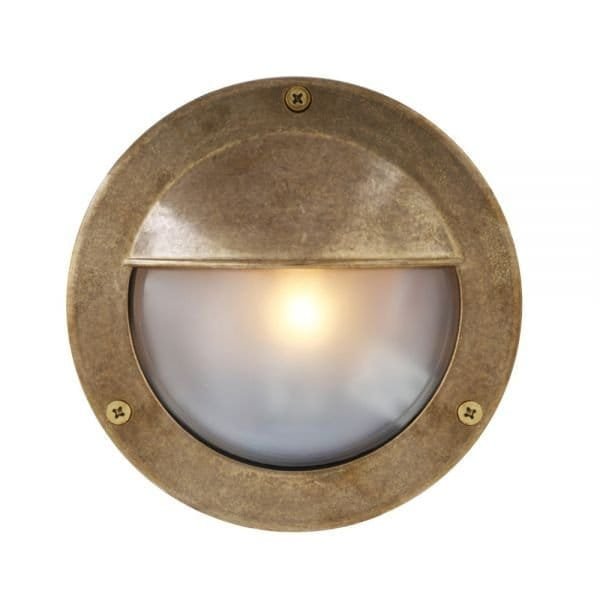
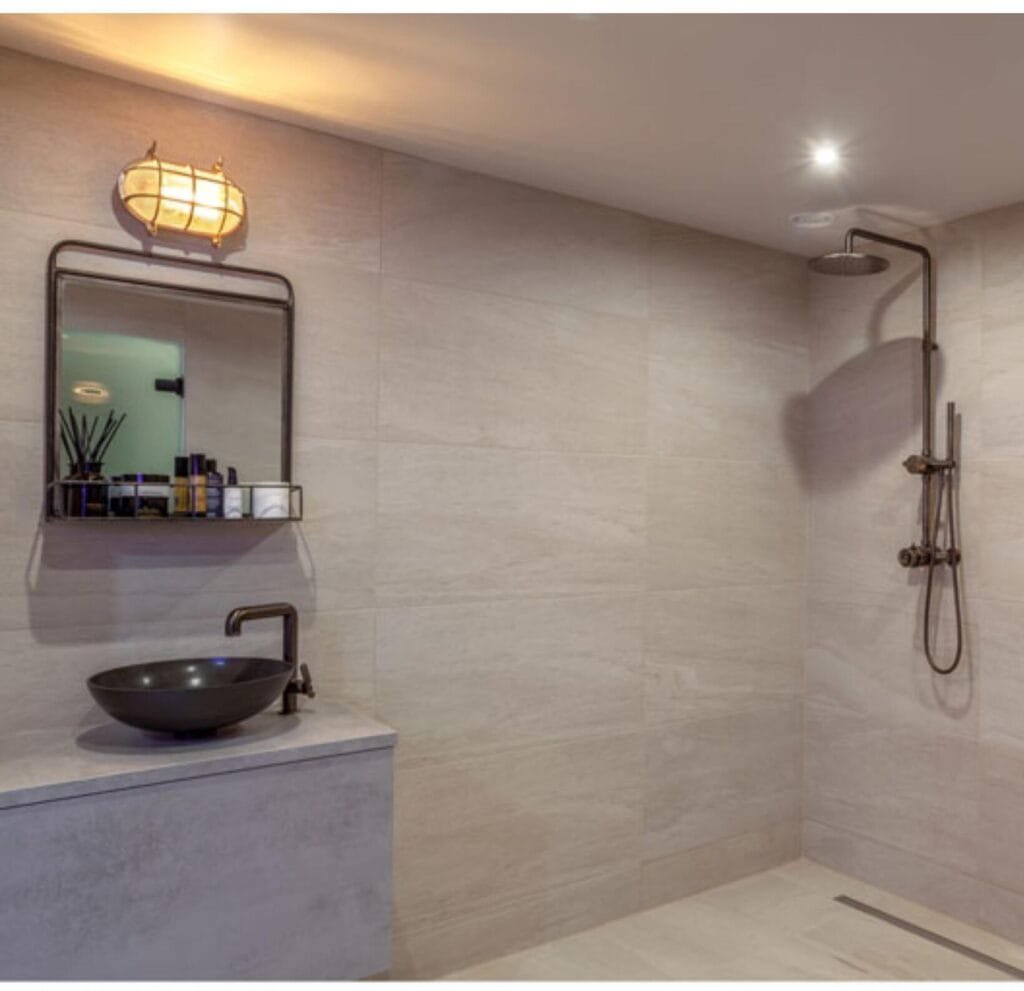
Industrial aesthetic interiors benefit from authentic bulkhead lighting bringing genuine work-space character.
Applications:
- Loft conversions: Exposed brick and concrete complemented by industrial fixtures
- Kitchen task lighting: Above work surfaces requiring robust focused light
- Bathroom lighting: IP-rated bulkheads suitable for high-moisture environments
- Hallways and corridors: Durable lighting for high-traffic areas
Design considerations:
- Choose brass or aged finishes complementing industrial materials
- Position fixtures highlighting architectural features (exposed brick, steel beams)
- Use warm white LED (2700-3000K) softening industrial edges
- Mix bulkhead sizes creating visual interest
Technical Specifications and Installation
Bulb Selection for Bulkhead Lights
Most bulkheads accommodate standard E27 (Edison screw) LED bulbs, offering flexibility in brightness and colour temperature.
Recommended specifications by application:
Garages and workshops:
- Brightness: 800-1000 lumens per bulkhead
- Colour temperature: 4000-5000K (cool white/daylight)
- Why: Accurate colour rendering for mechanical work, clear visibility for detailed tasks
Utility and service areas:
- Brightness: 600-800 lumens
- Colour temperature: 4000K (neutral white)
- Why: Adequate illumination for occasional tasks without harshness
Outdoor applications:
- Brightness: 600-900 lumens depending on coverage area
- Colour temperature: 2700-3000K (warm white)
- Why: Welcoming appearance, appropriate for residential settings
Interior decorative:
- Brightness: 400-600 lumens
- Colour temperature: 2700K (warm white)
- Why: Atmospheric lighting complementing interior aesthetics
Always specify dimmable LED bulbs even if not initially installing dimmers. This preserves flexibility for future adjustment.
Mounting Heights and Positioning
Exterior wall mounting:
- Standard height: 1.8-2.2m provides optimal coverage without creating glare
- Spacing: 3-4 metres apart for continuous boundary illumination
- Avoid: Positions where fixture could be accidentally struck (beside gates, narrow passages)
Garage and workshop mounting:
- Wall mounting: 1.8-2.2m distributing light across work areas
- Ceiling mounting: Central position or spaced evenly for larger garages
- Consider: Vehicle height and door clearances when positioning
Interior mounting:
- Follow room-specific requirements
- Maintain aesthetic consistency with other fixtures
- Consider furniture and traffic patterns
Installation Requirements
UK electrical regulations: Part P Building Regulations require qualified electricians for new circuits, outdoor installations, and modifications to existing circuits. Always hire registered electricians ensuring compliant, safe installation.
Mounting considerations: Quality brass bulkheads weigh 2-5kg depending on size. Ensure mounting surface provides adequate support:
- Solid walls: Standard masonry fixings adequate
- Hollow walls: Locate studs or use appropriate cavity fixings
- Weatherproof sealing: Seal mounting holes preventing water ingress behind fixture
Cable entry:
- Cables should enter fixture from below where possible, preventing water tracking along cables
- Use appropriate cable glands maintaining IP rating
- Avoid tight bends potentially damaging cable insulation
Switching and control:
- Position switches conveniently for intended use pattern
- Consider PIR sensors for security applications
- Dimmer switches add flexibility (verify LED bulb compatibility)
Maintenance and Care
Cleaning and General Maintenance
Brass bulkheads:
Monthly (coastal properties) / Quarterly (inland):
- Wipe with damp cloth removing dust and deposits
- Coastal properties: Fresh water rinse removing salt accumulation
Annually:
- Remove glass cover, clean thoroughly inside and out
- Inspect gasket condition, replace if showing wear or compression – Tip: Run some Vaseline around the seal, helps to keep the seal supple.
- Polish brass if maintaining bright finish, or embrace natural patina
- Check mounting security, tighten if necessary
- Verify electrical connections secure (power off first)
Patina consideration: Solid natural or raw brass develops natural patina—this is desirable characteristic, not deterioration. Patina provides protective layer whilst adding authentic character. If you prefer bright brass, gentle metal polish restores original appearance. Either approach maintains structural integrity.
Some of our bulkheads are available in variable finishes; Antique brass, Antique Silver (Indoor only) , Can be coloured on request (optional extra)
Aluminium bulkheads:
Quarterly:
- Wipe with damp cloth and mild detergent
- Check for any white oxidation (aluminium corrosion)—remove with fine wire wool if present
- Inspect gasket and glass condition
Plastic bulkheads (if you have them):
Regular inspection essential:
- Check for cracks or impact damage
- Monitor UV yellowing or discolouration
- Verify gasket maintains flexibility
- Plan replacement when deterioration evident
Gasket Replacement
Gaskets provide weather sealing. Quality fixtures use replaceable rubber or silicone gaskets requiring periodic renewal.
When to replace:
- Visible compression or flattening
- Hardening or cracking
- Evidence of water ingress
- Typically every 5-10 years depending on exposure
Replacement process:
- Switch off power at consumer unit
- Remove glass cover
- Remove old gasket, clean mounting surfaces thoroughly
- Install new gasket ensuring proper seating
- Reinstall glass cover with appropriate torque (not over-tight)
- Restore power, verify operation
Quality manufacturers supply replacement gaskets. Mullan Lighting fixtures use standard gasket profiles available through our service department.
Frequently Asked Questions
What’s the difference between bulkhead lights and standard outdoor lights?
Bulkhead lights feature more robust construction specifically designed for harsh environments. Key differences include:
Protection: Bulkheads have substantial cage guards or thick polycarbonate/glass covers protecting against impacts. Standard outdoor lights typically lack physical protection beyond basic IP-rated housing.
Sealing: Bulkheads are designed from the ground up for complete weather protection. Standard outdoor lights often achieve IP ratings through basic gaskets rather than comprehensive sealed construction.
Serviceability: Quality bulkheads allow component replacement—gaskets, glass, bulb holders can be renewed. Many standard outdoor lights are sealed units requiring complete replacement when components fail.
Durability: Bulkheads use heavier-gauge materials and more substantial mounting, designed for industrial environments and rough treatment. Standard decorative outdoor lights prioritise aesthetics over ruggedness.
Applications: Bulkheads excel in garages, workshops, industrial spaces, marine environments, and anywhere requiring robust protected lighting. Standard outdoor lights suit decorative residential applications where impact protection isn’t essential.
Do I need IP54 or IP65 bulkhead lights?
Choose IP54 for:
Covered garages with overhead shelter
Utility rooms and interior service areas
Protected workshops and storage buildings
Under eaves, overhangs, or porch roofs
Sheds and outbuildings with weather protection
Choose IP65 for:
Fully exposed exterior walls without shelter
Coastal properties and marine applications
Areas subject to pressure washing or water jets
Completely unsheltered boundary walls
Professional marine installations (boats, docks)
Important consideration: Material quality often matters more than IP rating. A brass IP54 bulkhead with proper gaskets and quality construction frequently outlasts plastic IP65 fixtures through superior materials and better sealing execution. The IP rating measures basic protection capabilities, not build quality or longevity.
If your application has ANY overhead protection, IP54 brass bulkheads provide excellent long-term performance whilst costing less than IP65 alternatives.
Why are brass bulkhead lights so much more expensive than plastic ones?
Brass bulkheads cost more initially but deliver superior value over their lifespan:
Material costs: Solid brass costs significantly more than polycarbonate plastic. A brass bulkhead body requires several kilograms of quality metal versus a few hundred grams of moulded plastic.
Manufacturing: Brass bulkheads are typically hand-assembled with individual quality control. Our Mullan fixtures are crafted in Ireland using traditional techniques ensuring proper sealing and finish quality. Plastic bulkheads are mass-produced with minimal labour.
Longevity: Brass lasts 20-30+ years versus 3-5 years for plastic. Over 25 years:
Brass: One £165 fixture + £30 maintenance = £195 (£7.80 annually)
Plastic: Six £25 replacements = £150 (£6 annually), PLUS 6× electrician installation charges (£360-600), PLUS environmental waste
Including installation labour, brass becomes significantly cheaper after the first replacement cycle whilst eliminating hassle and waste.
Property value: Quality brass fixtures are noticed and appreciated by discerning property buyers. Cheap plastic contractor bulkheads suggest corner-cutting. For visible locations, brass fixtures enhance rather than diminish property appeal.
Sustainability: One brass fixture serving 25 years eliminates 5-8 plastic units from landfills. Choosing brass represents responsible environmental stewardship.
Can I use bulkhead lights indoors?
Absolutely. Bulkhead lights work brilliantly in industrial-style interiors, utility rooms, and spaces where robust lighting makes practical sense.
Popular interior applications:
Industrial-style kitchens: Above work surfaces, replacing standard spotlights with authentic industrial character. IP-rated bulkheads handle kitchen moisture whilst adding textural interest.
Loft conversions: Exposed brick and concrete walls complemented by period-appropriate industrial fixtures. Bulkheads reference the space’s warehouse or factory origins.
Utility rooms: Practical protected lighting for high-moisture areas with temperature fluctuations. Much more durable than standard ceiling lights.
Bathrooms: IP65 bulkheads suitable for wet areas (zones 1 and 2). Provides nautical or industrial character whilst meeting safety requirements.
Hallways and corridors: Robust lighting for high-traffic areas where decorative fixtures might be damaged. Particularly appropriate in period conversions or industrial-style properties.
Commercial spaces: Restaurants, cafés, gyms, retail spaces with industrial aesthetic benefit from authentic bulkhead lighting.
Interior installation tips:
Choose warm white LED (2700-3000K) softening industrial edges
Consider brass or aged finishes complementing interior materials
Mix bulkhead sizes creating visual rhythm
Position highlighting architectural features
Browse our bulkhead lights collection for interior-appropriate designs.
How do I clean and maintain brass bulkhead lights?
Brass bulkheads require minimal maintenance whilst lasting decades:
Regular cleaning (monthly for coastal, quarterly inland):
Wipe exterior with damp cloth removing dust and deposits
Coastal properties: Fresh water rinse removes salt preventing accelerated patina development
Dry thoroughly with soft cloth
Deep cleaning (annually):
Switch off power at consumer unit
Remove glass cover (typically unscrews or unclips)
Clean glass thoroughly inside and out with warm soapy water
Inspect gasket condition—replace if showing wear, compression, or cracking
Clean brass body with damp cloth
Optional: Polish brass if maintaining bright finish (see below)
Reinstall glass ensuring proper seating and appropriate torque
Restore power, verify operation
Brass finishing options:
Natural patina (our recommendation): Allow brass to develop natural aged appearance. This patina actually protects underlying metal whilst adding authentic character. In coastal environments, patina provides valuable corrosion protection. Simply wipe clean periodically—no polishing required.
Bright brass: If you prefer maintaining original brightness, use gentle brass polish (Brasso or similar) following manufacturer instructions. Polish every 6-12 months depending on exposure. Avoid abrasive polishes potentially scratching brass surface.
Gasket replacement: Replace gaskets every 5-10 years depending on exposure and compression. Mullan Lighting supplies replacement gaskets for all our bulkhead designs. This simple maintenance ensures weather sealing remains effective indefinitely.
Tip: Run some Vaseline around the seal, helps to keep the seal supple.
What to inspect annually:
Gasket condition and compression
Glass integrity (cracks, chips)
Mounting security (tighten if loose)
Electrical connections (power off first)
Cable condition where visible
With basic maintenance, quality brass bulkheads serve reliably for 25+ years.
Are bulkhead lights suitable for coastal properties?
Yes—but material choice is absolutely critical for coastal applications. Salt-laden air and moisture destroy inferior materials rapidly.
Essential: Solid brass or marine-grade aluminium only
Why brass excels in coastal locations:
Forms protective patina resisting further corrosion
Solid construction—no plating to fail
Traditional maritime material proven over centuries
Maintains structural integrity indefinitely
Can be polished or allowed to age naturally
Why brass-plated alternatives fail: Brass-plated zinc or steel fixtures appear similar initially but plating fails within 6-18 months in coastal conditions. Once plating breaches, underlying metal corrodes rapidly, often destroying fixture within 2-3 years.
Why plastic fails: Salt water accelerates plastic degradation. UV exposure combines with salt creating rapid yellowing, embrittlement, and eventual cracking. Polycarbonate bulkheads rarely survive 5 years in harsh coastal conditions.
Why galvanised steel fails: Galvanised coating provides temporary protection but fails within 3-5 years in salt air. Rust appears first at mounting points and seams, then spreads rapidly.
Coastal maintenance requirements:
Monthly fresh-water rinse: Removes salt deposits before they accelerate patina development or cause corrosion in gaskets and mounting hardware. Takes 2 minutes per fixture using garden hose.
Annual deep clean: Full gasket inspection and glass cleaning as detailed above.
Our coastal recommendations: Mullan Lighting marine bulkheads are manufactured in Ireland where coastal conditions rival any British location. These fixtures survive Donegal weather—among the harshest marine environments in Europe. Solid brass construction, traditional techniques, and quality gaskets ensure reliable long-term performance.
For coastal applications, never economise on fixture quality. The £40-60 difference between brass and inferior materials disappears quickly when cheap fixtures require replacement every 2-3 years plus installation costs.
Are your bulkhead lights Guaranteed?
Yes, our brass bulkhead wall lights are all guaranteed for 5 years against manufacturing malfunctions.
Conclusion: Choosing Bulkhead Lights That Last
Successful bulkhead lighting balances immediate functionality with long-term value. By understanding IP ratings appropriate to your application, recognising superior material quality, and investing in fixtures designed for decades rather than years, you create lighting serving reliably whilst bringing authentic industrial or nautical character.
Whether illuminating garages requiring robust workshop lighting, coastal properties demanding corrosion-resistant fixtures, or industrial-style interiors celebrating authentic work-space aesthetics, our brass and aluminium bulkhead collection offers solutions emphasising quality over disposability, craftsmanship over mass production, and lasting value over short-term savings.
Browse Our Bulkhead Lighting Collections
By Application:
- Bulkhead Lights – Complete collection
- Brass Outdoor Lights – Corrosion-resistant fixtures
- Outdoor Lighting – Complete outdoor range
By Style:
- Marine and nautical bulkheads – Authentic ship-specification fixtures
- Industrial bulkheads – Factory and warehouse styling
- Contemporary bulkheads – Modern minimal designs
Related Guides:
- Complete Outdoor Wall Lights Guide – Comprehensive outdoor lighting resource
- IP44 vs IP65 Comparison – Detailed IP rating guidance
- Outdoor Light Maintenance – Care and cleaning instructions
All our bulkhead lights feature quality construction from established manufacturers including Mullan Lighting (Ireland), accommodate standard LED bulbs, include proper UK certifications, and come with comprehensive warranties backing superior construction.
Need guidance? Our lighting specialists understand British weather challenges and coastal conditions. We’ll guide you toward bulkhead lighting solutions appropriate for your specific application, ensuring fixtures that perform reliably for decades.