Kitchen Lighting Trends 2026: What’s Transforming UK Kitchens
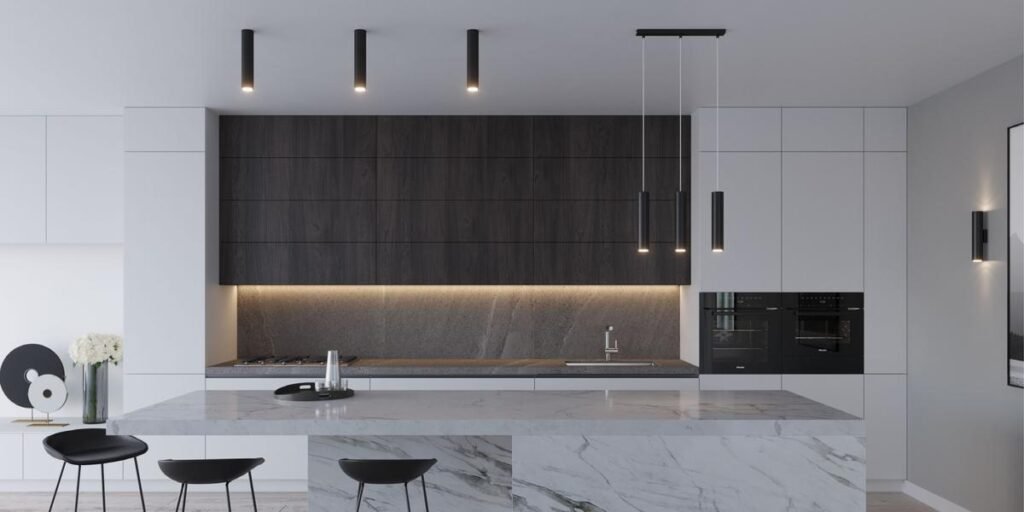
The kitchen has always been the testing ground for home lighting innovation, and 2026 is no exception. UK homeowners are reimagining kitchen lighting with a focus on bold statement pieces, layered illumination, and materials that blend industrial edge with warm sophistication.
If you’re planning a kitchen update or complete renovation this year, understanding these emerging trends will help you create a space that’s both beautifully lit and bang on-trend. Here’s everything you need to know about kitchen lighting in 2026.
This post is part of our comprehensive Modern Lighting Trends for 2026 guide. For trends across your entire home, start there.
- The Biggest UK Kitchen Lighting Shift of 2026
- The Five Layers of 2026 Kitchen Lighting
- Layer 5: Kitchen Wall Lights: The Underused Layer
- Material & Finish Trends in the UK for 2026 Kitchen Lighting
- UK Kitchen Lighting by Layout Type
- Practical Planning: Getting Your Kitchen Lighting Right
- Combining Trends: Three 2026 Kitchen Lighting Schemes
- Installation & Electrical Considerations
- Budget Planning: Investment vs. Value
- Maintenance & Longevity
- Common Kitchen Lighting Mistakes to Avoid
- What's Next? Complete Your 2026 UK Home
- Ready to Transform Your Kitchen?
The Biggest UK Kitchen Lighting Shift of 2026
The three-pendant rule is over. For the past several years, kitchen islands have been dominated by rows of three matching pendants. In 2026, UK kitchens are embracing a more dramatic approach: one large, oversized statement pendant that provides both functional task lighting and serves as the room’s focal point.
Why the Shift to Single Oversized Pendants?
Visual simplicity: One large pendant creates a cleaner, less cluttered sight line than multiple fixtures.
Greater impact: A single statement piece draws the eye and becomes a conversation starter.
Easier installation: One ceiling fixing point instead of three, with simpler wiring and positioning decisions.
Better proportions: Modern kitchen islands are often 2+ metres long. One substantial pendant better suits these proportions than small fixtures spaced in a row.
Practical lighting: Today’s LED technology means one well-designed pendant can provide ample task lighting for the entire island surface.
Choosing Your Statement Island Pendant
Size guidelines for UK kitchens:
- Island 1.2-1.5m long: Pendant 35-45cm diameter
- Island 1.5-2m long: Pendant 45-60cm diameter
- Island 2m+ long: Pendant 60cm+ diameter or consider an elongated linear pendant
Popular styles for 2026:
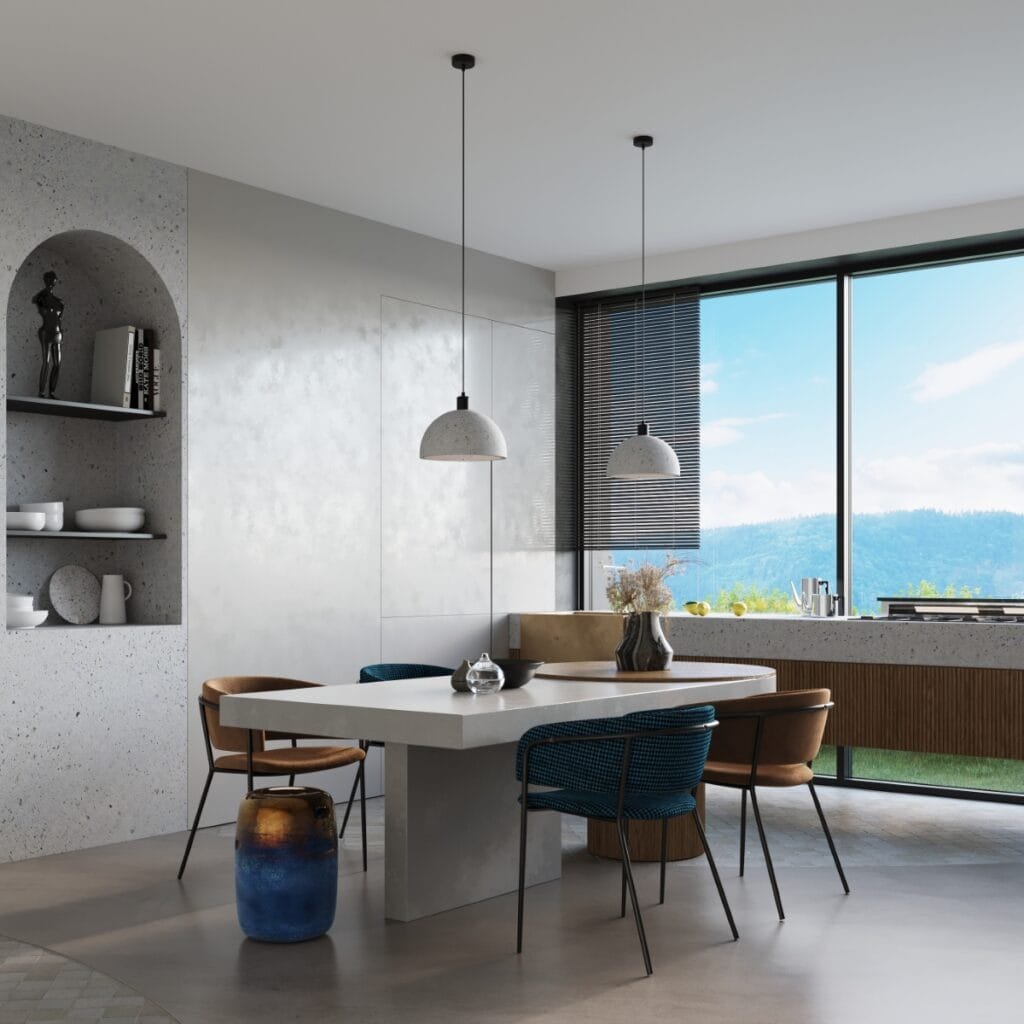
- Concrete dome pendants with brass detailing and opal glass diffusers
- Large barn-style industrial pendants in matte black with warm gold interiors
- Oversized globe pendants with industrial cage frames and Edison-style LED bulbs
- Architectural linear pendants in concrete or metal, ideal for very long islands
Shop the look:
The Five Layers of 2026 Kitchen Lighting
Modern kitchen lighting isn’t about one fixture doing all the work. The 2026 approach uses five distinct layers, each serving a specific purpose.
Layer 1: Ambient (General) Lighting
What it does: Provides overall illumination for the entire kitchen space.
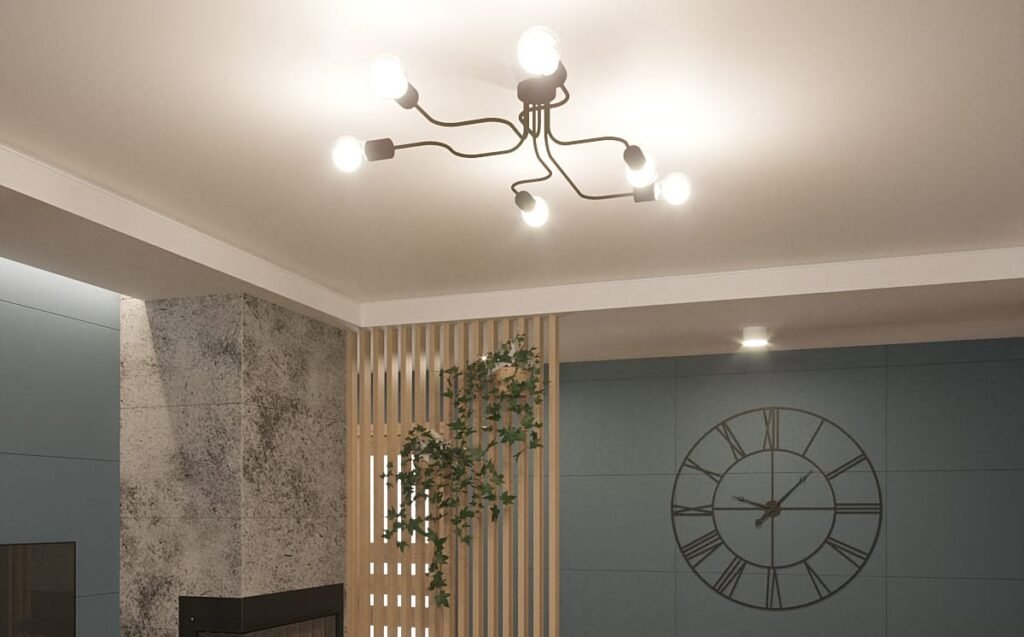
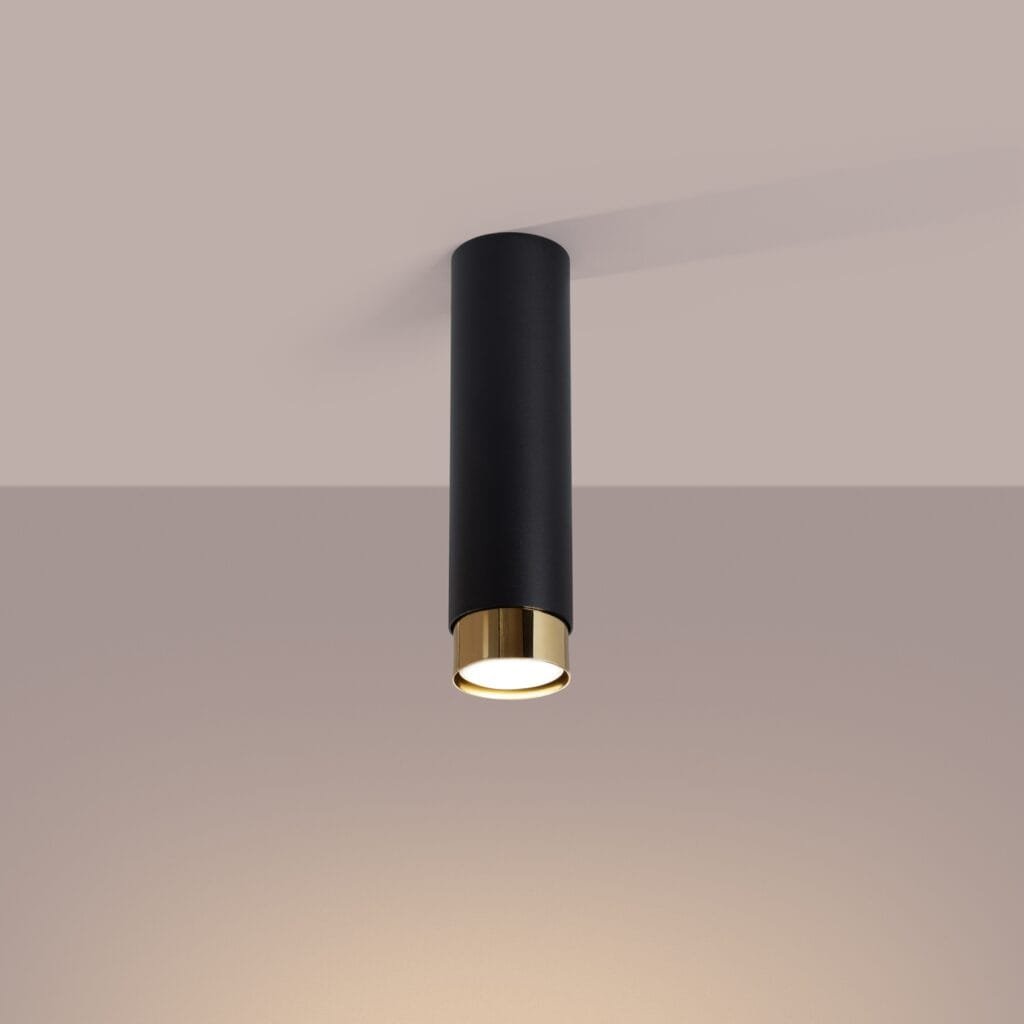
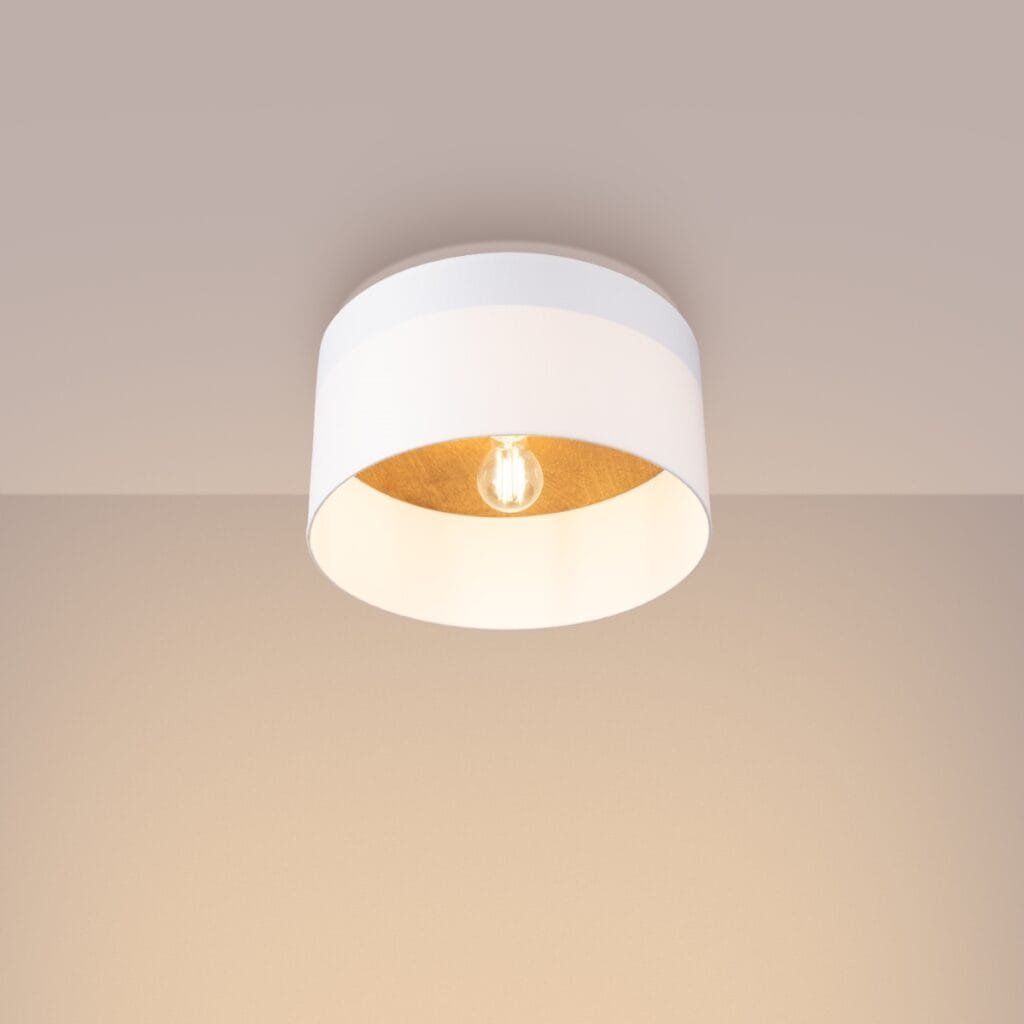
2026 trend: Flush or fixed ceiling lights in matte black or graphite finishes. Multiple fixtures distributed evenly across the ceiling, providing soft, glare-free general light.
Avoid: Harsh downlights with narrow beam angles. The trend is moving away from spotlights toward softer, more diffused ambient lighting.
Recommended: 3-4 smaller ceiling-mounted fixtures (depending on room size) with warm white LEDs (2700-3000K) on a dimmer switch.
Shop the look: Explore our Ceiling Lights for ambient fixtures that complement contemporary UK kitchens.
Layer 2: Task Lighting (Island & Worktops)
What it does: Focused lighting for food preparation, cooking, and detailed tasks.
2026 trend for islands: As discussed, one oversized pendant positioned 75-85cm above the island surface.
2026 trend for perimeter worktops: Slimline LED strip lighting under wall cabinets, recessed into the cabinet base for an invisible profile. Warm white (3000K) with high CRI (90+) for accurate colour rendering when preparing food.
Installation tip: Position LED strips toward the front of the cabinet base, not the back wall, to minimize shadows on your work surface.
Pro tip: Choose dimmable LED strips so you can adjust task lighting based on time of day and activity.
Layer 3: Accent Lighting (Open Shelving & Glass Cabinets)
What it does: Highlights architectural features, display items, and adds visual depth.
2026 trend: Integrated LED strips inside glass-fronted cabinets or mounted beneath open shelving to create warm, inviting glows around displayed items.
Why it matters: Accent lighting transforms functional storage into design features, making your kitchen feel more curated and intentional.
Recommended: Warm white (2700K) LED strips with dimming capability. This layer should be subtle—a gentle glow, not bright illumination.
Layer 4: Feature/Decorative Lighting
What it does: Adds personality and visual interest beyond pure function.
2026 trend: Architectural wall sconces flanking windows, statement pendants over breakfast bars, or brass-accented wall lights near doorways. These fixtures contribute ambient light but are chosen primarily for their design impact.
Popular choices:
- Industrial wall lights with brass detailing positioned on either side of a large window
- A second pendant (smaller than the island pendant) over a breakfast bar or dining nook
- Linear wall washers that create dramatic uplighting on feature walls
Shop the look: Browse our Kitchen Wall Lights for decorative fixtures that enhance your kitchen’s character.
Layer 5: Kitchen Wall Lights: The Underused Layer
Wall lights are rarely the first thing people plan in a kitchen, but they’re one of the most effective tools for adding warmth and character. A pair of wall lights flanking a window, a sconce above a dresser, or a directional fitting above a worktop all add a layer of light that ceiling fittings alone can’t provide.
For 2026, brass and glass wall lights are the material choice — either handmade Irish brass fittings with Holophane or globe glass shades, or directional spotlights with warm copper or gold interiors.
In more modern kitchens, corrugated tube spotlights like the Karbon range give a considered industrial look that works well as task lighting at counter level.
Shop the look: Kitchen Wall Lights — brass, glass, ceramic and modern styles.
Layer 6: Natural Light Enhancement
What it does: Maximizes and complements natural daylight.
2026 approach: Rather than relying solely on artificial lighting during the day, the trend is to use lighting that enhances rather than competes with natural light.
How to implement:
- Choose warm white LEDs (2700-3000K) that mimic natural daylight colour temperature
- Install dimmers on all circuits so you can reduce artificial lighting when natural light is strong
- Use light-diffusing fixtures (opal glass, frosted shades) that blend seamlessly with daylight
- Position reflective surfaces (brass, polished metal) to bounce natural light deeper into the space
Material & Finish Trends in the UK for 2026 Kitchen Lighting
The materials you choose are just as important as the fixtures themselves. All our fittings are made by crafts people in the EU & UK so quality is guaranteed.
Here’s what’s defining kitchen lighting aesthetics in 2026.
Concrete: Raw Texture Meets Refinement
Concrete remains the hero material for 2026 kitchen lighting, but it’s being used in more refined ways.
What’s trending:
- Concrete dome pendants with smooth, sealed finishes (not rough or unfinished)
- Concrete combined with brass or copper detailing
- Light-coloured concrete (grey, taupe) rather than dark charcoal
- Opal glass diffusers inside concrete shades for softer light
Why it works in kitchens: Concrete is durable, easy to clean, and its neutral tones work with virtually any kitchen colour scheme. The material adds organic texture without overwhelming the space.
Perfect for: Island pendants, ceiling-mounted fixtures, and even waterproof concrete wall lights near sinks.
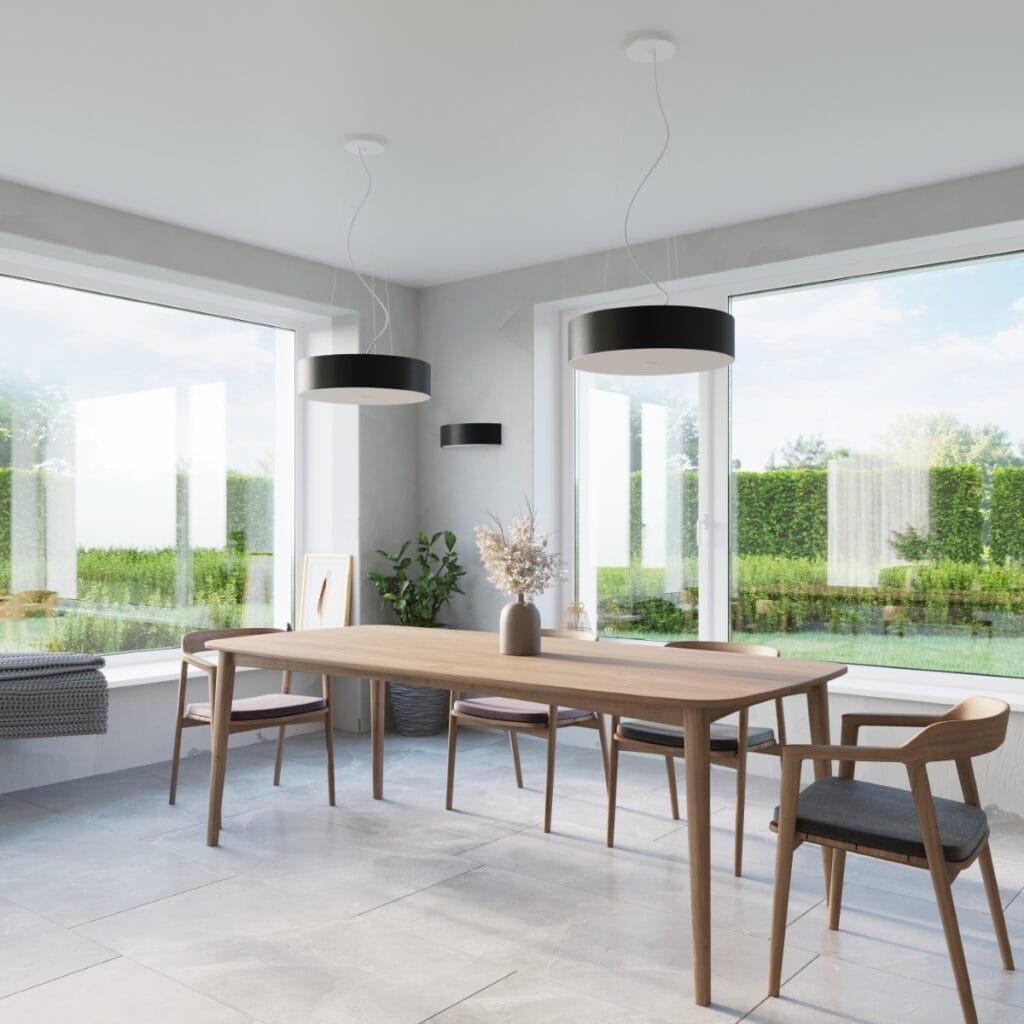
Matte Black: The Timeless Contemporary Choice
Matte black remains a staple, but in 2026 it’s being softened with warmer elements.
What’s trending:
- Matte black fixtures with brass or gold interiors
- Black metal paired with opal glass rather than exposed bulbs
- Mixed finishes: black frames with brass sockets and detailing
Why it works in kitchens: Black grounds contemporary kitchens, creating visual anchors that prevent all-white or all-wood kitchens from feeling washed out.
Perfect for: All lighting layers—ambient ceiling lights, island pendants, and wall sconces.
Warm Brass & Soft Gold: The 2026 Metallic
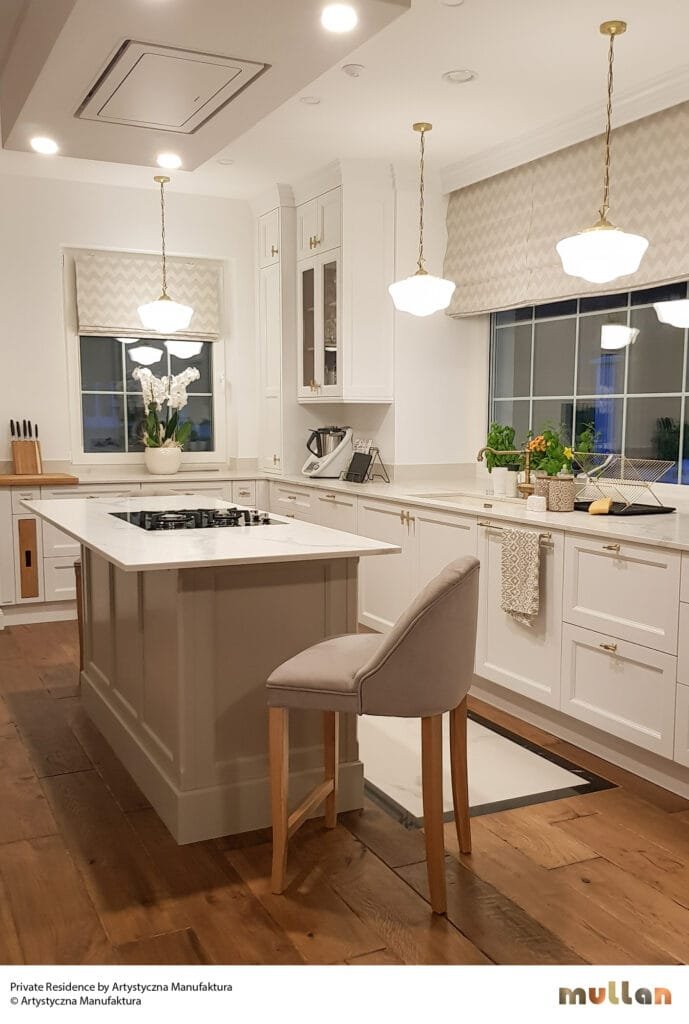
Cool-toned metals (brushed nickel, polished chrome) are out. Warm metallics are in.
What’s trending:
- Brushed brass (not shiny or overly polished)
- Antique brass with slight patina
- Soft gold finishes
- Aged copper accents
Why it works in kitchens: Warm metals complement warm white LEDs, wood tones, and natural materials. They add richness without traditional formality.
Perfect for: Accent details (bulb holders, hanging rods, cage frames) rather than entire fixtures. The trend is subtle brass accents on concrete or black fixtures, not all-brass lights.
Shop the look: Many of our Mullan brass-accented industrial lights capture this exact aesthetic.
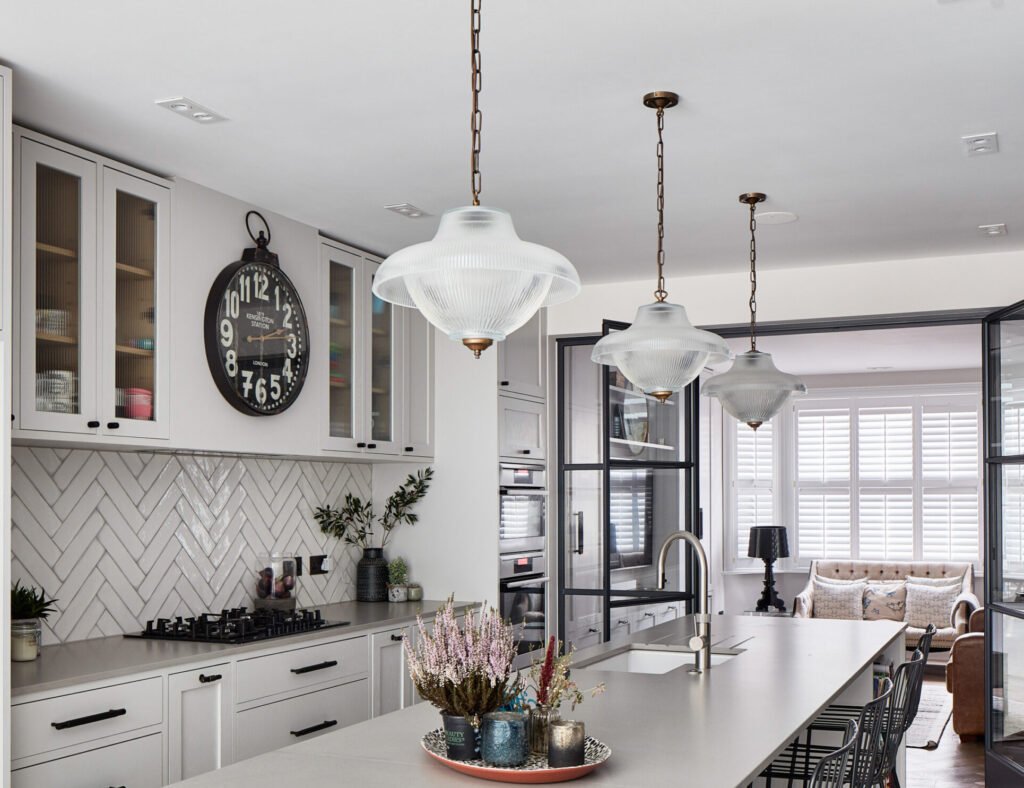
Opal Glass: The Diffuser of Choice
Exposed Edison bulbs are being replaced by opal glass diffusers.
What’s trending:
- White opal glass domes inside industrial pendants
- Frosted glass cylinders in ceiling fixtures
- Diffused glass combined with metal cages
Why it works in kitchens: Opal glass eliminates glare, provides comfortable ambient lighting, and creates a softer, more sophisticated look than bare bulbs.
Perfect for: All lighting types, especially task lighting where glare-free illumination is essential – Kitchen glass lighting doesn’t have to be just ‘kitchen’, Holophane and schoolhouse styles work too!
UK Kitchen Lighting by Layout Type
Different UK kitchen layouts require different lighting approaches. Here’s how to apply 2026 trends to your specific kitchen configuration.
Galley Kitchens
Challenge: Narrow space with limited ceiling space for multiple fixtures.
For galley kitchens where flexibility matters, track lighting is an efficient alternative to multiple ceiling fittings — a single track with adjustable spotlights covers the full run of the kitchen without requiring multiple ceiling connections. See our Kitchen Track Lighting range including wooden track systems.
2026 solution:
- 2-3 industrial ceiling lights down the centre line for ambient lighting
- Track Lighting – where light can be directed with moveable spotlights
- LED strip task lighting under all wall cabinets
- One architectural wall light at each end to visually lengthen the space
Avoid: Pendants over narrow galley kitchens—they’ll make the space feel more cramped.
L-Shaped Kitchens with Island
Challenge: Balanced lighting across two work zones (perimeter and island).
2026 solution:
- One oversized pendant over the island (the focal point)
- 3-4 industrial ceiling lights distributed across the perimeter ceiling
- LED strips under perimeter cabinets
- Optional: A second, smaller pendant over the dining area of the L
Key principle: The island pendant should be the visual star, with perimeter lighting receding into the background.
Open-Plan Kitchen/Dining/Living
Challenge: Creating distinct zones while maintaining visual flow.
2026 solution:
- One large concrete or industrial pendant defines the island/kitchen zone
- Different style pendant(s) over the dining table to differentiate that zone
- Industrial ceiling lights for ambient coverage across the entire open space
- Architectural wall lights in the living zone
Key principle: Use lighting to define zones without sharp divisions. Maintain a consistent colour temperature (2700-3000K) throughout for cohesion.
U-Shaped Kitchens
Challenge: Avoiding a tunnel-like feel while adequately lighting three walls of workspace.
2026 solution:
- Industrial ceiling lights distributed evenly across the ceiling
- LED strips under cabinets on all three walls
- Accent lighting inside any glass-fronted cabinets to break up solid runs of cabinetry
- Optional: Wall sconces on the open end to draw the eye outward
Avoid: Pendants in U-shaped kitchens unless you have a very wide opening—they can obstruct movement.
Practical Planning: Getting Your Kitchen Lighting Right
Beyond style, here are the practical considerations that ensure your 2026 kitchen lighting actually works.
Colour Temperature: The 2700-3000K Rule
What it means: Colour temperature, measured in Kelvin (K), determines whether light appears warm (yellowish) or cool (bluish).
2026 recommendation: 2700-3000K for all kitchen lighting.
- 2700K: Very warm, like traditional incandescent bulbs. Best for ambient and accent lighting.
- 3000K: Warm white. Best for task lighting where you need slightly brighter, crisper light.
Why it matters: Warm white light makes food look appetizing, creates inviting atmospheres, and complements the warm metals and natural materials trending in 2026.
Avoid: “Cool white” (4000K+) or “daylight” (5000K+) bulbs. These create harsh, clinical lighting that feels unwelcoming in residential kitchens.
Dimming: Non-Negotiable in 2026
Every lighting circuit in your kitchen should be dimmable. Here’s why:
Flexibility: Bright task lighting for cooking, soft ambient lighting for entertaining.
Energy efficiency: Run lights at 70-80% to extend LED lifespan and reduce energy consumption.
Circadian support: Dimmer, warmer lighting in evenings supports natural sleep patterns.
Mood setting: Transform your kitchen from functional workspace to intimate dining space with a dimmer switch.
Technical note: Ensure your LED bulbs are labelled “dimmable” and use LED-compatible dimmer switches. Not all LEDs dim smoothly—check product specifications.
Lumen Output: How Bright Is Bright Enough?
General ambient lighting: 300-400 lumens per square metre of kitchen space.
Task lighting (island & worktops): 700-800 lumens per square metre directly on work surfaces.
Example calculation for a 4m x 3m kitchen (12 sq metres):
- Ambient lighting: 3,600-4,800 lumens total (achievable with 4 x 1000-lumen ceiling fixtures)
- Island task lighting: If your island is 2m x 1m (2 sq metres), you need 1,400-1,600 lumens focused on that surface
Pro tip: It’s easier to dim bright lights than brighten dim ones. If in doubt, go slightly higher on lumens and use dimmers to adjust.
Positioning Heights: The Numbers That Matter
Island pendants: 75-85cm above the island surface. This provides task lighting without blocking sight lines across the kitchen.
Ceiling fixtures: Mounted flush or on short drops (10-15cm maximum) in standard-height kitchens to maximize headroom.
Wall sconces: 150-170cm from floor to the center of the fixture for ambient wall lighting.
Under-cabinet strips: Recessed into the front underside of wall cabinets, 5-10cm from the front edge.
IP Ratings: Water Resistance Where It Matters
Near sinks and hobs: Use IP44-rated fixtures (protected against water splashes).
General kitchen areas: IP20 (standard indoor rating) is sufficient for most kitchen lighting.
What the numbers mean:
- First digit: Protection against solids (dust, etc.). 4 = protected against objects >1mm.
- Second digit: Protection against liquids. 4 = protected against water splashes.
Shop the look: Look for IP44-rated options in our glass and industrial kitchen collections for above-sink installations.
Combining Trends: Three 2026 Kitchen Lighting Schemes
Here are three complete lighting schemes that embody 2026 trends. Choose the one that matches your kitchen style.
Scheme 1: Soft Industrial Minimalist
Perfect for: Contemporary kitchens with handleless cabinets, stone worktops, and neutral colour palettes.
The fixtures:
- Island: One 50-60cm concrete dome pendant with brushed brass detailing and opal glass diffuser
- Ambient: Four matte black industrial ceiling lights with opal glass shades
- Task: Warm white (3000K) LED strips under all wall cabinets
- Accent: Brass-accented wall lights flanking a large window
- All fixtures: Dimmable, 2700-3000K
The effect: Sophisticated, pared-back, and effortlessly modern. The concrete pendant anchors the space while soft diffused light keeps the mood warm.
hop the look:
Scheme 2: Warm Industrial Farmhouse
Perfect for: Shaker-style kitchens, exposed wood beams, mixed material kitchens with wood and stone.
The fixtures:
- Island: One oversized barn pendant (60cm+) in matte black with gold interior
- Ambient: Three matte black industrial ceiling lights with clear glass shades and warm LED bulbs
- Task: Warm white (2700K) LED strips under cabinets
- Accent: A second, smaller barn pendant over a breakfast bar or dining nook
- All fixtures: Dimmable, 2700K
The effect: Inviting, characterful, and warm. The barn-style pendants add farmhouse charm while industrial ceiling lights keep the look contemporary.
Shop the look: Black Pendant Lights + Modern Farmhouse Lighting + Industrial Pendants
Scheme 3: Architectural Minimalist
Perfect for: Ultra-modern kitchens with sleek lines, integrated appliances, and monochromatic colour schemes.
The fixtures:
- Island: One large linear concrete pendant (80-100cm long) or cylindrical pendant in matte black
- Ambient: Recessed LED downlights with narrow trims (minimal visual presence)
- Task: Recessed LED strips under cabinets with no visible profile
- Accent: Linear architectural wall washers creating dramatic uplighting on one feature wall
- All fixtures: Dimmable, 3000K, high CRI (90+)
The effect: Clean, sophisticated, and almost invisible until switched on. Lighting becomes part of the architecture.
Shop the look: Industrial Pendants (linear options) + Industrial Kitchen Wall Lights (architectural styles)
Installation & Electrical Considerations
While this is a design guide, understanding the practical installation side helps you plan effectively.
Do You Need an Electrician?
Yes, for:
- Installing new ceiling fixtures (pendants, ceiling lights)
- Hardwiring LED strip systems
- Adding dimmer switches to existing circuits
- Any work involving your consumer unit/fuse box
Possibly DIY, if competent:
- Replacing existing plug-in fixtures with similar plug-in fixtures
- Installing battery-powered accent lights in cabinets
UK regulation reminder: All fixed electrical work in kitchens must comply with Part P of Building Regulations. Most work must be done by a qualified electrician or notified to Building Control.
Planning Before Renovation
If you’re doing a full kitchen renovation, coordinate your lighting plan early:
Before plastering:
- Mark all ceiling and wall positions for fixtures
- Run cables to all ceiling fixture positions
- Install backboxes for wall lights
- Run power to island location if needed
Before cabinet installation:
- Install LED strip systems with drivers hidden inside cabinets or in void spaces
- Run power for under-cabinet lighting to wall cabinets
Before decorating:
- Test all circuits and dimmer switches
- Install actual fixtures (protect during final decoration)
Cable Management for Island Pendants
Options for power to island pendants:
- Ceiling feed: Cable runs through the ceiling void to a position above the island. Cleanest solution if your ceiling allows access.
- Floor feed: Cable runs under the floor and up through the island structure. Common in new builds.
- Track/rail system: Visible cable management using industrial-style cable tracks. Less common but can work in very industrial-styled kitchens.
Budget Planning: Investment vs. Value
Kitchen lighting ranges wildly in price. Here’s how to allocate your budget wisely.
Where to Invest
Priority 1: Your island pendant – This is your statement piece and the first thing people see. Invest in quality here.
Priority 2: Dimmer switches – Don’t skimp on quality dimmers. Cheap dimmers cause flickering and shorten LED lifespan.
Priority 3: LED strip systems with proper drivers – Quality LED strips with stable drivers provide consistent, flicker-free task lighting.
Where to Save
Ambient ceiling lights – These recede into the background. Mid-range industrial ceiling lights work perfectly well—you don’t need designer fixtures here.
Accent lighting – Battery-powered LED strips for inside cabinets work well and cost a fraction of hardwired systems.
Cable/switches – Unless highly visible, standard wiring and switches are fine. Save decorative toggle switches for feature walls only.
Sample Budget for Medium-Sized Kitchen (12 sq m)
- Statement island pendant: £150-300
- 4x Industrial ceiling lights: £40-80 each = £160-320
- LED strip task lighting (5m): £60-120 including driver
- 2x Wall sconces (optional): £50-100 each = £100-200
- Dimmer switches: £30-50 each x 2-3 circuits = £60-150
- Professional installation: £300-600
Total: £830-1,690 depending on fixture choices and installation complexity.
Maintenance & Longevity
Part of the 2026 trend toward quality over quantity means choosing lighting that lasts.
LED Lifespan
Quality LED bulbs last 15,000-50,000 hours. At 5 hours use per day:
- 15,000-hour LED: 8+ years
- 25,000-hour LED: 13+ years
- 50,000-hour LED: 27+ years
Choose integrated LEDs or fixtures that accept standard bulbs – If LEDs are integrated and fail, you may need to replace the entire fixture. Fixtures accepting standard E27/E14/GU10 bulbs offer more flexibility.
Cleaning Concrete & Metal Fixtures
Concrete: Wipe with slightly damp cloth. Avoid harsh chemicals that can damage sealant.
Matte black metal: Microfiber cloth only. Avoid abrasive cleaners that can damage the powder coating.
Brass: Buff gently with soft cloth. Aging/patina is part of the aesthetic—don’t polish aggressively.
Opal glass: Warm soapy water and soft cloth. Glass diffusers should be cleaned every 3-6 months for optimal light output.
Common Kitchen Lighting Mistakes to Avoid
Even with great fixtures, poor planning undermines results. Here’s what not to do.
Mistake 1: Only Installing Downlights
Recessed downlights alone create harsh, shadowy lighting with no character. Solution: Layer ambient downlights with statement pendants and accent lighting.
Mistake 2: Choosing Cool White LEDs
4000K+ creates clinical, unwelcoming light. Solution: Stick to 2700-3000K warm white.
Mistake 3: No Dimming
Fixed brightness means your kitchen has one mood 24/7. Solution: Put every circuit on a dimmer.
Mistake 4: Island Pendant Too High or Too Low
Too high = insufficient task lighting. Too low = banging your head. Solution: 75-85cm above island surface.
Mistake 5: Ignoring Natural Light
Artificial lighting that fights with natural light looks wrong during daytime. Solution: Choose warm white LEDs that complement daylight and install dimmers.
Mistake 6: Forgetting About Glare
Exposed bright bulbs or fixtures without diffusers cause eye strain. Solution: Choose opal glass diffusers or fixtures that shield the bulb from direct view.
What’s Next? Complete Your 2026 UK Home
Kitchen lighting is just one piece of the 2026 lighting story. Explore our other guides:
- Modern Lighting Trends for 2026 – The complete overview of trends across your entire home
- Bedroom Lighting Trends 2026 – Creating relaxing, wellness-focused sleeping spaces
- Bathroom Lighting Trends 2026 – IP-rated fixtures that combine safety with style
- Living Room Lighting Trends 2026 – Layered lighting for versatile living spaces
Browse our curated collections of modern kitchen lighting:
- Kitchen Island Lights – Statement island fixtures that define 2026
- Concrete Lighting – Raw texture meets refined design
- Kitchen Ceiling Lights – Perfect ambient lighting for contemporary kitchens
- Kitchen Pendant Lights – Warmth and character for farmhouse-modern kitchens
- Kitchen Wall Lights – Architectural accents and decorative layers
Ready to Transform Your Kitchen?
Have questions about choosing the right lighting for your specific kitchen? Our team is here to help. Get in touch or explore our collections to start creating your 2026-inspired kitchen.