Picture Lights & Poster Lights UK
Brass & Adjustable Designs
The right picture light transforms how you experience artwork. A well-chosen brass picture light above a painting brings out details, depth and colour that ambient room lighting simply cannot replicate. Whether you are illuminating a large oil painting in a dining room, a collection of prints in a hallway, or a single statement piece above a fireplace, a dedicated picture light makes the difference between artwork that sits on a wall and artwork that commands the room.
This page covers traditional brass picture lights, coloured poster lights, and how to choose the right size and position for your space.
Traditional Brass Picture Lights
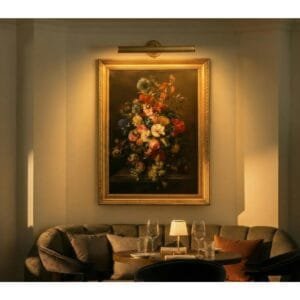
The classic picture light mounts above the frame and extends outward on a fixed or adjustable arm, casting light down across the artwork surface. Solid brass construction ages beautifully — the antique brass finish develops a warm patina over time that suits both period and contemporary interiors.
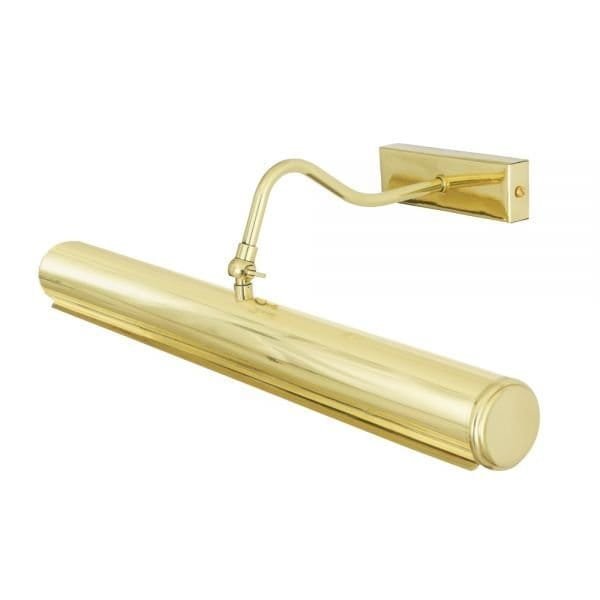
Dublin 50 cm Solid Brass Picture Light | 4 Brass or 9 Coloured Finishes
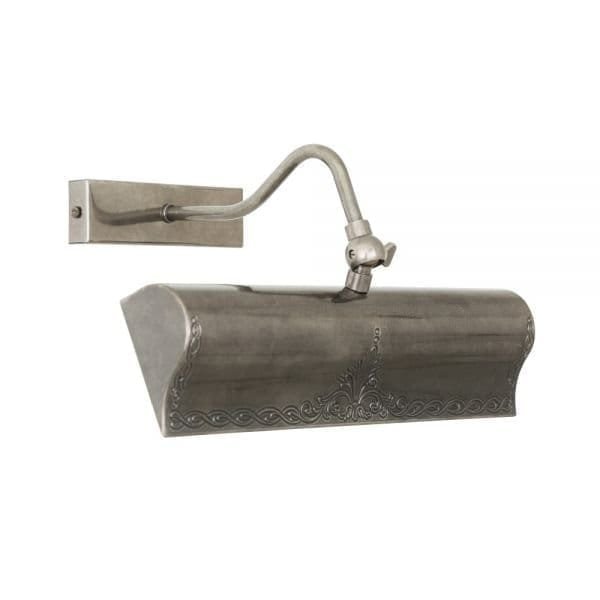
Spence 30cm Cast Brass Picture Light | Adjustable
Dublin Picture Lights
The Dublin range is a traditional picture light in solid brass, available in two sizes: 50cm and 60cm. The larger format suits substantial paintings and canvases where narrower lights would leave the edges in shadow. Both sizes are available in antique brass and polished brass finishes.
The 50cm Dublin suits paintings from approximately 60cm to 90cm wide. The 60cm suits larger canvases from 90cm upward, or can be used on slightly smaller pieces where a more generous spread of light is preferred.
Spence Picture Lights
The Spence range covers the full size spectrum from compact to generous — 19.5cm, 30cm and 60cm — making it the most versatile picture light in the collection. The smaller 19.5cm and 30cm sizes suit prints, photographs and smaller paintings that the Dublin would overwhelm. The 60cm matches the Dublin’s reach for larger works.
Available in antique brass, polished brass and satin nickel finishes. The Spence’s slim profile keeps the fitting unobtrusive — the artwork stays the focus.
Belfast Picture Light
The Belfast in antique bronze is a heavier, more architectural picture light suited to formal rooms and substantial framed pieces. The bronze finish sits well alongside dark wood furniture, oil paintings in gilt frames, and period interiors where a brighter brass might feel too bright.
Elle Picture Lights
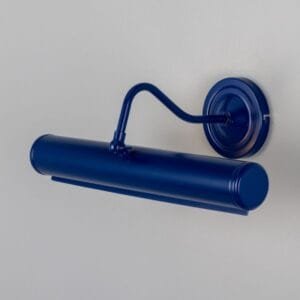
The Elle takes a different approach — a slim, lightweight picture light available in nine colours including Sapphire Blue, Racing Green, Antique Pink, Vanilla Cream, and classic brass. At 35.5cm wide it suits medium-sized artwork and works particularly well in rooms where the light fitting itself is part of the decorative scheme. Children’s rooms, creative studios, and contemporary spaces where colour is used deliberately.
The Elle is ailable in a choice of Brass finishes, plus 2 black options and nine vibrant colours
Including the New Bilbury & Cambridge Reeded Finish Brass Picture Lights
Part of the Picture Light Collection
Poster Lights
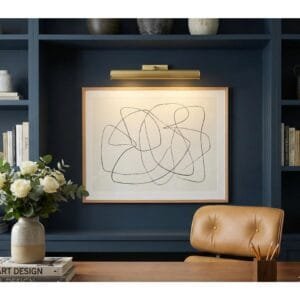
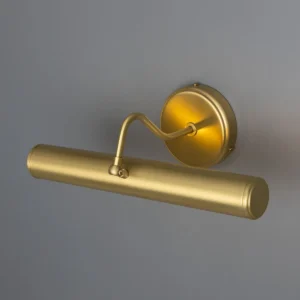
Poster lights take a different approach to picture lighting — rather than mounting above the frame and angling down, they mount at artwork height and direct an adjustable beam across the surface. This gives more positioning flexibility, particularly for artwork placed at non-standard heights or in locations where a conventional picture light cannot mount easily above the frame.
Lyx, Reznor and Nico Poster Lights
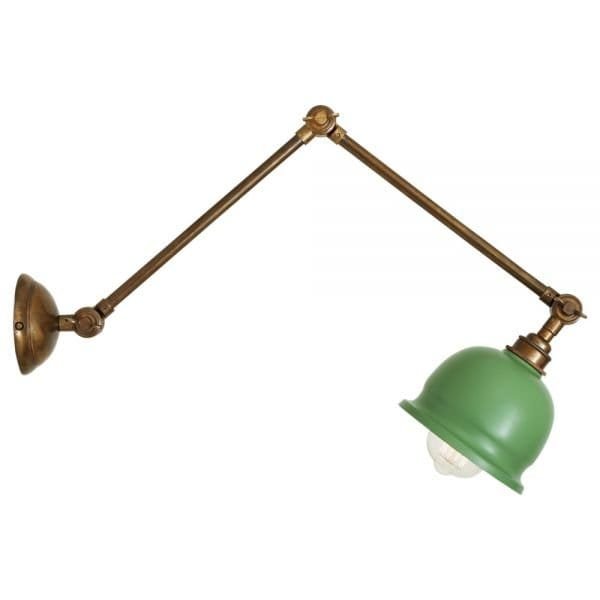
The Lyx, Reznor and Nico are adjustable poster lights in brass, black and coloured finishes. Their mechanical, industrial-influenced design suits contemporary art, photography, and spaces where the fitting’s own character is part of the room’s aesthetic. The adjustable arm rotates to direct light precisely, and the compact head keeps the fitting from competing with the artwork.
These work well on gallery walls where multiple pieces sit at different heights – a single adjustable poster light can be repositioned to illuminate different works as displays change.

Sanford Outdoor Sign Light IP65
Choosing the Right Size
Picture light sizing directly affects how well your artwork displays. The general rule is that the picture light should span approximately two-thirds the width of the frame.
Small prints and photographs up to 40cm wide: the Spence 19.5cm or Spence 30cm
Medium paintings from 40cm to 80cm wide: the Spence 30cm, Elle 35.5cm, or Dublin 50cm
Large canvases from 80cm upward: the Dublin 50cm, Dublin 60cm, or Spence 60cm
For very large horizontal pieces or multi-panel displays, two picture lights positioned symmetrically often work better than a single wide fitting.
When in doubt, slightly larger tends to look better than slightly too small — a narrow light on a large painting leaves the edges in shadow and looks underpowered.
Placement and Positioning
Height above the frame
Traditional picture lights mount 15cm to 30cm above the frame’s top edge, angled down at approximately 30 degrees. This illuminates the artwork evenly while minimising glare on glass or varnished surfaces.
For textured paintings or works without glass, positioning closer to the frame creates more dramatic shadowing that emphasises brush strokes and surface texture. Works under glass benefit from slightly higher positioning and a gentler angle to reduce reflection.
Avoiding glare
If glare on glass is a problem, try positioning the light 25cm to 30cm above the frame rather than 15cm to 20cm. Angling slightly less steeply can also help. For works with persistent glare issues, non-reflective museum glass is worth considering.
Sight lines
The fitting should remain unobtrusive from the room’s main viewing positions. In hallways where people approach straight-on, centre the light above the artwork. In living rooms where people view from various angles, the fitting position may need to compromise slightly to avoid glare from different seating positions.
Bulb Selection and Light Quality
Colour temperature
Warm white (2700K to 3000K) suits most artwork — it enhances reds, oranges and earth tones and creates an inviting atmosphere. This is the right choice for oil paintings, watercolours, and most photography.
Neutral white (3500K to 4000K) works for contemporary art with cooler colour palettes. Avoid anything above 4000K for picture lighting — it makes artwork look harsh and colours inaccurate.
CRI matters
CRI (Colour Rendering Index) measures how accurately a light source renders colours. For picture lighting, choose bulbs with a CRI of 90 or above. Lower CRI bulbs make colours in paintings look flat or shifted — particularly noticeable in reds and greens.
LED technology
Modern LED bulbs produce minimal heat and virtually no UV radiation, making them safe for artwork long-term. Traditional halogen and incandescent bulbs generate heat that can cause gradual fading. Always use LED bulbs in picture lights.
Dimmable LED bulbs give additional control — brighter for daytime viewing when competing with natural light, lower in the evening for ambience. Most Dublin, Spence and Elle fittings are compatible with standard E27 or G9 dimmable LEDs.
Room by Room
Living rooms and dining rooms
These are typically the rooms where your most significant artwork lives. Traditional brass picture lights — Dublin or Spence in antique or polished brass — suit the formality of these spaces well. Their substantial presence matches the importance of the artwork they illuminate.
In dining rooms, position artwork so it is visible from the table without creating glare for seated guests. In living rooms, consider how the light works from multiple seating positions as people move around the space.
Hallways and staircases
Hallways suit picture lighting particularly well. The linear nature of a corridor allows for a sequence of artwork with consistent lighting treatment, creating a gallery feel. Install picture lights on individual switches so you can control each piece independently — useful for hallways where some artwork may be better lit than others.
For staircase walls where artwork sits at changing heights, poster lights with adjustable arms give more flexibility than fixed picture lights.
Bedrooms
Bedroom picture lighting benefits from dimming capability — the same bright output that suits daytime viewing feels harsh in the evening. Consider fitting picture lights in bedrooms on a dimmer switch. Warm white (2700K) suits bedrooms particularly well, creating a calm rather than energising atmosphere.
Home offices and studies
Studies and offices often feature artwork or maps that benefit from dedicated lighting. The industrial styling of the Lyx or Reznor poster lights suits the functional aesthetic of a working space. Position carefully to avoid screen glare — the adjustable head allows you to fine-tune the angle so light falls on the artwork without reflecting into your eye line.
Quality and Longevity — Irish Made
The picture lights in this collection come from Mullan Lighting, handcrafted in their restored factory in County Meath, Ireland. Each fitting is individually finished — the brass components are cast, polished and assembled by skilled craftspeople who understand how small details affect both appearance and longevity.
Solid brass construction ages well. The antique brass finish develops a warm patina over time that adds character rather than detracting from it. Unlike plated alternatives where the finish degrades when the plating wears through, solid brass remains solid brass throughout — there is nothing beneath the surface to expose.
This longevity changes the economics of picture lighting. A solid brass picture light that lasts 30 years costs a fraction of the price per year that cheap alternatives cost across multiple replacements. The quality case and the financial case point in the same direction.
Frequently Asked Questions
How far above the frame should a picture light be mounted?
15cm to 30cm above the top edge of the frame, angled down at approximately 30 degrees. Higher positioning with a gentler angle reduces glare on glass-fronted artwork.
What size picture light do I need?
The fitting should span approximately two-thirds the width of the frame. Small prints suit the Spence 19.5cm or 30cm. Medium paintings suit the 30cm, Elle 35.5cm or Dublin 50cm. Large canvases suit the Dublin 50cm, Dublin 60cm or Spence 60cm.
What colour temperature is best for artwork?
2700K to 3000K warm white for most paintings and photographs. Use a bulb with CRI 90 or above to ensure accurate colour rendering.
Do picture lights damage artwork?
Modern LED picture lights produce minimal heat and virtually no UV radiation – they are safe for artwork long-term. Avoid halogen or incandescent bulbs which generate heat that can cause fading over time. Use dimmable LED bulbs for the most versatility.
Do I need an electrician to install picture lights?
Picture lights that hardwire into the mains require installation by a qualified electrician under UK Building Regulations Part P. This provides the cleanest result and most reliable operation.
How do I stop glare on glass-covered artwork?
Position the light 25cm to 30cm above the frame rather than close to it, and angle it more gently. If glare persists, non-reflective museum glass is the most effective solution.
What is the difference between picture lights and poster lights?
Traditional picture lights mount above the frame and cast light downward across the artwork surface. Poster lights mount at artwork height with an adjustable head that directs light across the surface. Both serve the same purpose – poster lights give more positioning flexibility, particularly on gallery walls or where artwork sits at non-standard heights.
Can I use picture lights outdoors?
Most picture lights are for IP20 so forinterior use only. However the new Galle is IP65 rated so can be used in bathrooms or outside.
do your lights come with a warranty
Yes, all our Mullan brass lights have a 5 year warranty.
All fittings handcrafted in Ireland by Mullan Lighting. Free UK delivery on orders over £60.