Bedroom Lighting Trends 2026: Creating Your Perfect Sanctuary
Your bedroom should be your personal sanctuary—a space that supports rest, relaxation, and wellness. In 2026, bedroom lighting has evolved beyond simple overhead fixtures to embrace layered, wellness-focused design that actively supports better sleep and creates truly restorative environments.
UK homeowners are moving away from harsh, bright bedroom lighting toward softer, warmer schemes that work in harmony with our natural circadian rhythms. Here’s everything you need to know about creating a beautifully lit bedroom that looks stunning and supports your wellbeing.
This post is part of our comprehensive Modern Lighting Trends for 2026 guide. For trends across your entire home, explore the complete series.
- The Wellness Revolution in Bedroom Lighting
- The Six Key Bedroom Lighting Trends for 2026
- Bedroom Lighting by Room Size & Layout
- Choosing the Right Fixtures: A Detailed Breakdown
- Bedroom Lighting for Specific Sleep Needs
- Smart Lighting Integration
- Practical Installation Guidelines
- Styling Around Your Lighting
- Budget Planning for Bedroom Lighting
- Maintenance & Longevity
- Common Bedroom Lighting Mistakes (and How to Fix Them)
- What's Next? Complete Your 2026 Home
- Create Your Perfect Sleep Sanctuary
The Wellness Revolution in Bedroom Lighting
The biggest shift in 2026 bedroom lighting isn’t about style—it’s about health. Lighting design is now deeply informed by sleep science and our understanding of how light affects rest, recovery, and mood.
Understanding Circadian Lighting
Your body’s internal clock (circadian rhythm) is heavily influenced by light exposure. In 2026, bedroom lighting design respects this biological reality.
The principle: Bright, cool-toned light signals “daytime” to your brain. Warm, dim light signals “evening/nighttime” and promotes melatonin production.
The 2026 approach:
- Warm white LEDs only (2200-2700K) – nothing cooler
- Dimmable everything – from bright morning tasks to near-dark nighttime
- No blue-rich light after sunset – blue wavelengths suppress melatonin
- Layered control – multiple circuits you can adjust independently
What this means practically: Every light in your bedroom should be dimmable and warm-toned. This isn’t optional in 2026—it’s foundational.
The Death of the Single Ceiling Light
The days of one central ceiling light are over. Modern bedroom lighting uses multiple fixtures at different heights, each serving specific needs:
- Ambient layer – Soft overall illumination (ceiling fixtures)
- Task layer – Focused light for reading, getting dressed (bedside lights, vanity)
- Accent layer – Decorative interest and mood (wall sconces, feature pendants)
- Low-level layer – Safe navigation at night (floor-level guides, subtle wall lighting)
The result: A bedroom that adapts to different activities and times of day, always supporting rather than disrupting your natural rhythms.
The Six Key Bedroom Lighting Trends for 2026
1. Architectural Wall Sconces Replace Traditional Bedside Lamps
The bedside table lamp is being replaced by hardwired architectural wall sconces mounted directly to the wall.
Why the shift?
- Space efficiency: Frees up bedside table surface for books, phones, water
- Cleaner aesthetic: No lamp cords trailing to outlets
- Better positioning: Sconces can be mounted at exact reading height
- Symmetrical impact: Matching wall sconces create hotel-like sophistication
2026 wall sconce styles:
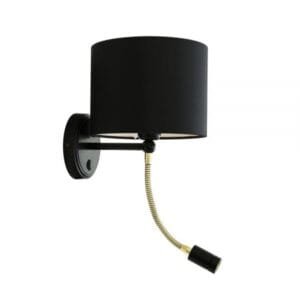
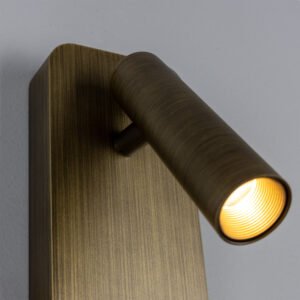
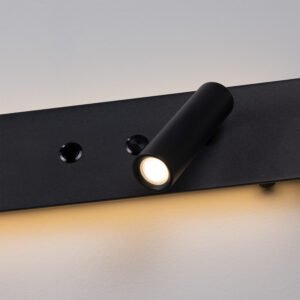
- Linear minimalist: Slim vertical or horizontal bars with integrated LEDs
- Articulated reading lights: Adjustable arms that swing where needed
- Soft industrial: Matte black sconces with opal glass diffusers
- Brass-accented minimal: Sculptural forms in brushed brass
Mounting height: 50-60cm above mattress level for comfortable reading without glare.
Shop the look: Browse our Bedroom Wall Lights for bedroom-appropriate sconces that combine function with refined design.

2. Statement Pendants for the Bold Bedroom
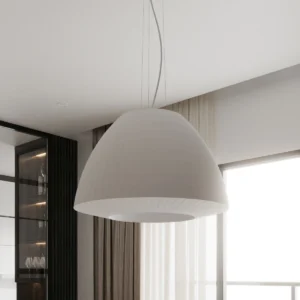
Not every bedroom needs a traditional flush ceiling light. In 2026, UK homeowners are hanging statement pendants in bedrooms—particularly in primary bedrooms with high ceilings.
What’s trending:
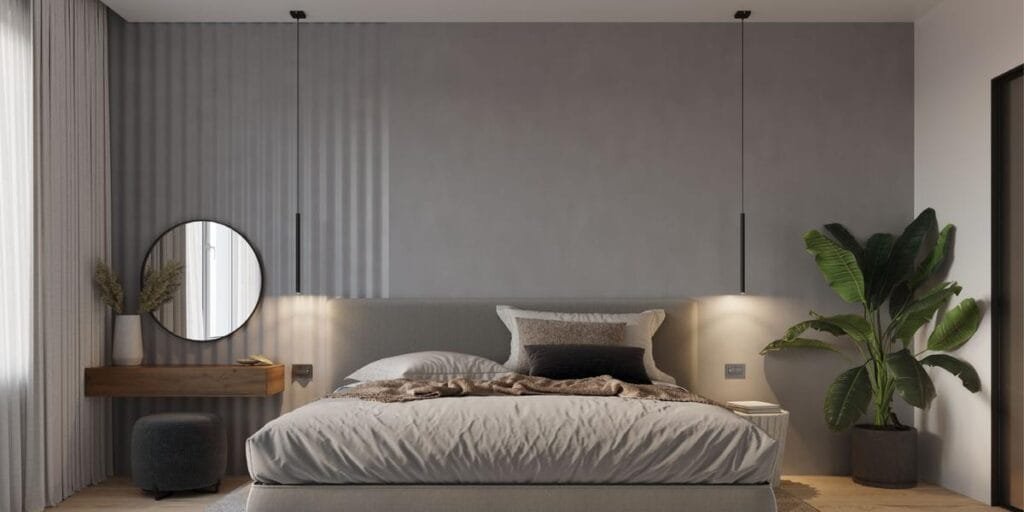
- Single oversized pendant positioned centrally as a sculptural focal point
- Concrete dome pendants (40-50cm diameter) with warm brass detailing
- Large globe pendants with matte black cages and opal glass diffusers
- Elongated cylinder pendants in concrete or metal
Critical requirements:
- Must be dimmable down to very low levels (10-20% brightness)
- Must use warm white LEDs (2200-2700K only)
- Should hang 210-220cm from floor to avoid head-banging when making bed
- Works best in rooms with 2.7m+ ceiling height
When not to use pendants: Low ceilings (under 2.5m), small bedrooms (under 12 sq m), or if you have ceiling fans.
Shop the look: Explore our Bedroom Pendants and Large Pendant Lighting collections for bedroom-appropriate statement pieces.

3. Biophilic Lighting: Natural Material Textures
Biophilic design—connecting indoor spaces with nature—is fundamental to 2026 bedroom lighting.
Material trends:
- Concrete: Natural, earthy, grounding. Perfect for contemporary bedrooms.
- Raw linen and natural fiber shades: Soft texture that diffuses light beautifully
- Wood accents: Walnut or oak combined with metal frames
- Neutral tones: Greige, taupe, soft grey, warm white
Light quality trends:
- Diffused over direct: Opal glass, linen, frosted finishes that create soft, glowing light
- Warm tones: 2200-2700K LEDs that mimic candlelight and firelight
- High CRI (90+): Accurate colour rendering that makes skin tones, fabrics, and wood look natural
Why it works: Natural materials and warm, diffused light create psychological calm. Your bedroom feels like a retreat rather than just another room.
Shop the look: Our wooden lighting collection embodies this natural, grounding aesthetic perfectly.
4. Dimmable Everything: Non-Negotiable in 2026
If a bedroom light isn’t dimmable, it doesn’t belong in a 2026 bedroom. Full stop.
What needs dimmers:
- Ceiling fixtures (ambient lighting)
- Wall sconces (reading/task lighting)
- Pendant lights (statement/ambient)
- Any decorative or accent lighting
Why it’s essential:
Morning: Bright light (70-100%) helps you wake up and get dressed
Evening: Medium light (30-50%) for winding down, reading, conversation
Night: Very low light (5-15%) for safe navigation without sleep disruption
Sleep: Complete darkness (0%) for optimal melatonin production
Technical note: Always pair dimmable LED bulbs with LED-compatible dimmer switches. Check both the bulb and dimmer are rated for low wattage (LEDs draw much less power than old incandescent bulbs).
Smart dimming: Consider smart dimmers that can be programmed to automatically dim as evening progresses, supporting your natural wind-down routine.
5. Layered Lighting with Independent Control
2026 bedrooms have multiple lighting circuits controlled independently:
Circuit 1: Ambient/ceiling – General room illumination (dimmed 0-100%)
Circuit 2: Bedside (left) – Reading/task light for one side of bed
Circuit 3: Bedside (right) – Reading/task light for other side of bed
Circuit 4: Accent/decorative – Optional feature lighting, floor lamps, accent wall lights
Why separate circuits matter: You can read on your side without disturbing your partner. You can have soft accent lighting without bright overhead glare. Each person controls their own lighting needs.
Practical installation: Each circuit has its own dimmer switch. Position switches near bed (switch panel on wall by headboard) or use smart lighting controlled by phone/voice.
6. Low-Level Navigation Lighting
The final layer of 2026 bedroom lighting addresses a practical need: safe movement at night without sleep-disrupting bright lights.
Options for night navigation:
LED strip under bed frame: Creates a soft glow at floor level, enough to see where you’re walking without waking you up fully.
Recessed floor lights near door: Small LED fixtures set into the floor provide a pathway.
Motion-activated night lights: Plugs into sockets, provides dim warm light only when movement detected.
Wall sconces with night mode: Some modern sconces have a very low “night” setting separate from reading mode.
Critical specification: Must be very warm (2200K or amber LEDs) and very dim. Blue-rich white LEDs defeat the purpose by signalling “daytime” to your brain.
Bedroom Lighting by Room Size & Layout
Different bedroom configurations need different approaches. Here’s how to apply 2026 trends to your specific space.
Small Bedrooms (Under 10 sq m)
Challenge: Limited floor and surface space; risk of lighting feeling cramped or overwhelming.
2026 solution:
- Ambient: 1-2 ceiling-mounted industrial lights with diffused glass (avoid pendants in small spaces)
- Task: Wall-mounted sconces both sides of bed (no bedside lamps taking up precious table space)
- Accent: Optional—one small wall sconce as decorative interest
- Night: LED strip under bed frame for low-level navigation
Avoid: Large statement pendants, floor lamps, multiple decorative lights. Keep it minimal.
Colour strategy: Use warm white (2700K) to make the space feel cozy rather than cramped.
Medium Bedrooms (10-15 sq m)
Challenge: Balancing adequate lighting with creating intimate, restful atmosphere.
2026 solution:
- Ambient: 2-3 industrial ceiling lights OR one medium statement pendant (45-50cm)
- Task: Wall sconces both sides of bed, plus optional reading chair with floor lamp or wall light
- Accent: Accent wall lighting or decorative sconce near wardrobe/dresser
- Night: LED strip under bed or motion-activated night light
This is the “standard” bedroom size where you have full flexibility. You can go minimal or layered depending on your preferences.
Large Primary Bedrooms (15+ sq m)
Challenge: Avoiding the space feeling empty while maintaining restful ambiance.
2026 solution:
- Ambient: One large statement pendant (55-60cm+) OR 3-4 ceiling fixtures distributed across space
- Task: Wall sconces both sides of bed, dedicated vanity/dressing area lighting, optional reading nook with floor or wall light
- Accent: Multiple accent lights—decorative sconces, feature wall lighting, artwork lighting
- Night: Multiple low-level options (under-bed LED strip, floor lights near bathroom door)
Pro tip: Large bedrooms benefit from zoning—use different circuits to independently light sleeping area, dressing area, and sitting/reading areas.
Bedrooms with Sloped/Vaulted Ceilings
Challenge: Standard ceiling fixtures may not work; pendant heights become tricky.
2026 solution:
- Ambient: Wall-mounted uplighters that wash light up sloped ceilings, creating soft indirect ambient glow
- Task: Wall sconces as usual (unaffected by ceiling shape)
- Accent: Use the slope to your advantage—mount small spotlights to highlight beams or architectural features
- Consider: Pendant lights can work if ceiling apex is high enough (2.7m+), but calculate drop carefully
Avoid: Recessed downlights in sloped ceilings—difficult to install and can look awkward.
Choosing the Right Fixtures: A Detailed Breakdown
Ceiling-Mounted Ambient Lighting
Industrial ceiling lights remain the workhorse of bedroom ambient lighting in 2026.
What to look for:
- Opal glass or fabric diffusers (not exposed bulbs—too harsh for bedrooms)
- Matte black or neutral finishes (avoids visual clutter)
- Low-profile mounts (flush or semi-flush—keeps ceiling uncluttered)
- Dimmable LEDs (2700K warm white)
Installation density: For a 12 sq m bedroom, 2-3 fixtures provide even ambient light. For larger rooms, add one fixture per additional 5-6 sq m.
Shop the look: Our Industrial Ceiling Lights collection includes many bedroom-appropriate options with soft diffusers.
Wall Sconces for Bedside
Wall sconces are the defining bedroom fixture of 2026. Here’s how to choose them.
Style options:
Minimalist linear: Slim vertical bars with integrated LEDs. Very contemporary, hotel-like aesthetic. Works in modern and minimalist bedrooms.
Articulated reading lights: Swing-arm or adjustable designs. Most practical—you can direct light exactly where needed.
Soft industrial: Matte black metal with small opal glass shades. Bridges contemporary and industrial aesthetics.
Brass sculptural: Warm brass in geometric or organic forms. Adds warmth and visual interest.
Mounting considerations:
- Height: 50-60cm above mattress top for comfortable reading
- Distance from headboard: 15-30cm out from headboard edge
- Switch location: Install switch on wall by headboard, not at door (you want to control from bed)
Technical specs:
- Dimmable (essential)
- Warm white 2700K (2200K even better for late evening)
- Adjustable if possible (swing arm, rotating head)
- Opal or diffused shade to prevent glare
Shop the look: Browse Bedroom Wall Lights for sconces that combine task function with refined design.
Statement Pendants
If you’re using a pendant as your ambient fixture, choose carefully.
Size guidelines:
- Bedroom 10-12 sq m: 40-45cm diameter
- Bedroom 12-15 sq m: 45-50cm diameter
- Bedroom 15+ sq m: 50-60cm diameter
Hanging height: 210-220cm from floor to bottom of fixture. This keeps it high enough to avoid heads while making beds, but low enough to feel like a feature.
Style choices:
Concrete dome: Earthy, grounding, pairs beautifully with natural textiles and wood furniture.
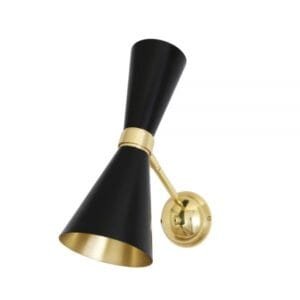
Matte black with brass interior: Sophisticated contrast; brass reflects warm light beautifully.
Large opal globe: Soft, sculptural, creates beautiful diffused ambient light.
Critical: Pendant must dim smoothly down to 10-20% brightness. Test before buying if possible.
Shop the look: Industrial Pendants and Concrete Lighting both offer bedroom-appropriate statement options.
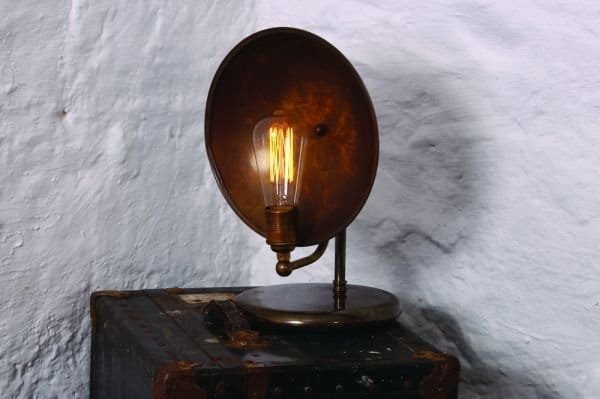
Floor and Table Lamps (Still Relevant)
While wall sconces dominate 2026 bedside lighting, floor and table lamps still have their place.
When to use table lamps:
- You rent and can’t install hardwired wall sconces
- You frequently rearrange furniture and want flexibility
- You have ample bedside table space and prefer the traditional aesthetic
When to use floor lamps:
- Reading chairs or sitting areas away from walls
- Corners that need visual weight and light
- Rooms where wall mounting isn’t possible
2026 styles:
- Tripod floor lamps in matte black with linen shades
- Concrete base table lamps with neutral fabric shades
- Minimalist steel arc lamps in brass or black
- Always: dimmable, warm white (2700K), with fabric or diffusing shades
Bedroom Lighting for Specific Sleep Needs
For Poor Sleepers / Insomnia
If sleep is challenging, lighting becomes even more critical.
Essential rules:
Strict warm tones: Use only 2200-2700K LEDs. Never use “daylight” bulbs in your bedroom.
Dim progressively: Start dimming lights 2-3 hours before sleep. Use 50% brightness in early evening, 20% before bed, 5-10% for final preparation.
Blue-light curfew: No screens (or screen night-shift mode) 1-2 hours before bed. No cool-toned lighting after 8pm.
Blackout during sleep: Complete darkness. Use blackout curtains/blinds and eliminate all light sources (cover LEDs on devices, no nightlights unless necessary).
Dawn simulation: Consider smart bulbs that gradually brighten in morning (simulating sunrise). Start 30 minutes before wake time, reaching 50% brightness by alarm.
For Shift Workers
Non-standard sleep schedules need adaptable lighting.
Key strategies:
Blackout capability: Total darkness during daytime sleep is essential. Blackout blinds plus blackout curtains if necessary.
Programmable lighting: Smart lighting systems that can simulate evening when you need to sleep (even at 2pm) and morning when you wake (even at 10pm).
Bright light on wake: Use bright, warm white (3000K acceptable here, higher than typical bedroom) to signal “morning” to your body whenever you wake.
Portable task lights: Clip-on or battery-operated reading lights allow you to read or work without disturbing daytime darkness for other household members.
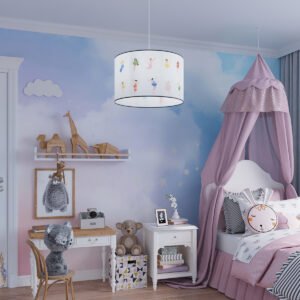
For Children’s Bedrooms
Kids’ rooms need lighting that grows with them and supports healthy sleep.
Age 0-3 (Nursery):
- Dimmable ceiling fixture for care tasks
- Very dim night light (2200K or amber LED) for overnight checks
- No blue-rich light ever
Age 4-10:
- Main ambient light (dimmable ceiling fixtures)
- Bedside light they can control themselves (table lamp or wall sconce with pull cord)
- Optional: colour-changing smart bulb for fun (but must go warm-only at bedtime)
- Night light only if child specifically needs it
Age 11-17:
- Same principles as adult bedrooms: layered, warm, dimmable
- Emphasize lighting routine as part of sleep hygiene
- Wall sconces for reading in bed (teach them to use properly—dim down progressively)
- Ensure desk task light for homework is separate from ambient bedroom lighting
Safety first: All children’s fixtures should be hardwired or have well-secured cables. Avoid tippy floor lamps and accessible hot bulbs.
Smart Lighting Integration
Smart lighting makes 2026’s layered, circadian-supporting approach more practical. Here’s what actually works.
Smart Dimmer Switches vs. Smart Bulbs
Smart dimmer switches: Replace your standard wall switches with smart dimmers. Control any dimmable bulb wirelessly.
Pros: One switch controls the whole circuit; works with any dimmable LED; often cheaper than multiple smart bulbs.
Cons: Requires professional installation (electrician); may need neutral wire.
Smart bulbs: LED bulbs with built-in wireless connectivity. Screw in like normal bulbs, control via app/voice.
Pros: Easy DIY installation; can create complex scenes; individual bulb control.
Cons: More expensive per bulb; relies on fixture power being “on”; can be confusing if someone uses physical switch.
2026 recommendation: Smart dimmer switches for ambient lighting circuits; smart bulbs for specific fixtures you want individual control over (like bedside sconces that could be different colours/brightness for each person).
Useful Automations for Bedroom Lighting
Evening wind-down:
- 8:00pm: Ambient lighting dims to 50%
- 9:30pm: Ambient dims to 20%, bedside sconces to 30%
- 10:30pm: All lights dim to 10%
Morning wake:
- 6:30am: Bedroom lights gradually brighten from 0% to 30% over 30 minutes
- 7:00am: Reach 50% (wake time)
Motion-triggered night mode:
- If motion detected between 11pm-6am: Turn on low-level floor lights at 5% warm white
- Lights turn off 2 minutes after motion stops
Reading mode (manual trigger):
- Tap once: Ceiling lights off, bedside sconces 60%, warm white
- Great for reading in bed without disturbing partner
Platforms & Compatibility
Most popular UK smart lighting platforms:
Philips Hue: Most mature system; excellent app; requires hub; expensive but reliable.
IKEA TRÅDFRI: Budget-friendly; good basics; limited advanced features.
TP-Link Kasa/Tapo: No hub needed; reliable; good value.
Lutron Caséta: Premium switches and dimmers; rock-solid reliability; professional installation recommended.
Check compatibility with your preferred voice assistant (Alexa, Google, Siri/HomeKit) before buying.
Practical Installation Guidelines
DIY vs. Professional Installation
DIY appropriate:
- Replacing existing table/floor lamps
- Installing plug-in wall sconces (if your wall has accessible outlets)
- Adding LED strip lighting (adhesive-backed, plug-in types)
- Screwing in smart bulbs
Definitely hire an electrician:
- Installing hardwired wall sconces (new wiring)
- Installing ceiling pendants or flush-mount fixtures
- Adding new circuits or dimmer switches
- Any work involving your electrical consumer unit
UK regulations: Electrical work in bedrooms is generally not notifiable under Part P Building Regulations, but poor electrical work is dangerous. If you’re not confident, hire a professional.
Wiring for Wall Sconces
If you’re installing wall sconces where none existed, here’s what’s involved (hire an electrician for this):
What needs to happen:
- Run cable from existing lighting circuit to new sconce positions
- Install backboxes in wall at sconce positions (often requires cutting into plaster)
- Install dimmer switches at convenient location (often near headboard)
- Connect and test
Best time to do this: During bedroom redecoration when walls will be patched and repainted anyway.
Cable routing: Cables run through wall cavity (easy in stud walls) or are surface-mounted in trunking (required in solid walls without chasing).
Cost estimate: £200-400 per pair of sconces including electrician time and materials (not including decoration repairs).
Positioning Considerations
Wall sconces:
- 50-60cm above mattress top
- 15-30cm from headboard edge
- Centred over bedside table position
- Switch within arm’s reach from bed
Ceiling pendants:
- Centred in room OR centred over bed (your choice)
- 210-220cm floor to bottom of fixture
- Ensure it’s not directly over where you walk around bed
Ceiling flush/semi-flush:
- Centred in room
- Multiple fixtures: evenly distributed for balanced light
Styling Around Your Lighting
Your lighting doesn’t exist in isolation. Here’s how to integrate 2026 bedroom lighting with overall bedroom design.
Colour Palettes That Work with Warm Lighting
Warm white lighting (2200-2700K) flatters these colour schemes:
Natural neutrals: Beige, taupe, warm grey, oatmeal, cream
Earth tones: Terracotta, rust, ochre, sage, olive
Warm woods: Walnut, oak, teak
Soft blush and peach: Dusty pink, apricot
Avoid with warm lighting: Cool greys, stark white, icy blue (they look dingy under warm light)
Material Pairings
Concrete lighting pairs with:
- Natural linen bedding
- Exposed brick or textured plaster walls
- Wood furniture in walnut or oak
- Neutral wool throws and cushions
Matte black lighting pairs with:
- White or cream bedding
- Minimalist furniture
- Brass or gold accents
- Monochrome artwork
Brass lighting pairs with:
- Rich jewel tones (emerald, navy, burgundy)
- Velvet upholstery
- Dark wood furniture
- Marble or stone surfaces
Headboard Considerations
Your headboard and wall sconces should work together.
Upholstered headboards: Wall sconces can mount directly to wall behind headboard, or to wall beside headboard. Upholstery doesn’t interfere.
Wood or metal headboards: Check sconce positioning won’t be blocked by headboard. May need to mount sconces slightly wider apart.
No headboard: Wall sconces become even more important—they frame the bed and create a headboard-like effect.
Budget Planning for Bedroom Lighting
How much should you invest, and where?
Where to Invest
Priority 1: Quality dimmers. Cheap dimmers flicker and ruin LED lifespan. Spend £40-60 per dimmer for quality units.
Priority 2: Bedside sconces. You use these daily. Spend £80-150 each for fixtures that look good and provide excellent task light.
Priority 3: Smart lighting (if using). Buy from reputable brands (Philips, Lutron, TP-Link). Cheap smart bulbs are frustrating.
Where to Save
Ambient ceiling fixtures can be mid-range. You’re not looking at them closely. £50-80 fixtures work perfectly well.
LED strips for under-bed lighting – basic warm white LED strips do the job. No need for premium here.
Night lights – simple plug-in motion-activated units for £15-25 work fine.
Sample Budgets
Budget bedroom lighting (£250-400):
- 2x Industrial ceiling lights: £60-80 each = £120-160
- 2x Simple wall sconces OR table lamps: £40-60 each = £80-120
- 2x Dimmer switches: £25-35 each = £50-70
- LED strip kit: £15-30
- Installation (if needed): £0-150 (depends on complexity)
Mid-range bedroom (£500-800):
- 1x Statement pendant OR 2-3 ceiling lights: £150-250
- 2x Quality wall sconces: £80-120 each = £160-240
- 2-3x Quality dimmer switches: £40-50 each = £120-150
- LED under-bed lighting: £30-50
- Smart hub/bulbs (optional): £50-100
- Professional installation: £150-300
Premium bedroom (£1,000-1,800):
- 1x Designer statement pendant: £300-500
- 2x Premium wall sconces (brass, designer): £150-250 each = £300-500
- Complete smart lighting system: £200-300
- Quality LED strips with drivers: £60-100
- Professional installation & programming: £300-500
Maintenance & Longevity
LED Lifespan in Bedroom Fixtures
Bedroom lighting typically runs fewer hours than kitchen or living room lighting, so LEDs last even longer.
Typical bedroom usage: 2-3 hours per day
Quality LED lifespan: 25,000-50,000 hours
Real-world lifespan in bedroom: 20-45 years
Choose wisely: Buy quality fixtures with replaceable bulbs (E27/E14/GU10 fittings) rather than integrated LEDs. When bulbs eventually fail, replacement is simple.
Cleaning Bedroom Fixtures
Concrete: Dust with dry microfiber cloth monthly. Spot-clean with barely damp cloth if needed.
Matte black metal: Microfiber cloth only. Avoid any liquids or cleaners that can damage powder coating.
Brass: Buff gently with soft cloth. Natural patina is desirable in 2026 aesthetic—don’t over-polish.
Fabric/linen shades: Vacuum with upholstery attachment quarterly. Some can be spot-cleaned with upholstery cleaner.
Opal glass: Remove and wash in warm soapy water annually for maximum light output.
When to Update
Quality bedroom lighting should last 10-20+ years with LED technology. Update when:
- Your aesthetic preferences change significantly
- Fixtures become damaged
- Technology advances make new options dramatically better (e.g., smart lighting becomes standard)
- You renovate the bedroom and want a fresh look
Avoid: Following trends too closely. Choose fixtures you’ll love for years, not months.
Common Bedroom Lighting Mistakes (and How to Fix Them)
Mistake 1: Only Overhead Lighting
The problem: One ceiling light creates harsh shadows and no flexibility.
The fix: Add wall sconces OR table lamps for bedside task lighting. Put ceiling light on dimmer.
Mistake 2: Cool White or “Daylight” Bulbs
The problem: 4000K+ light suppresses melatonin, making sleep harder.
The fix: Replace all bedroom bulbs with 2200-2700K warm white. Immediately better.
Mistake 3: Bedside Lamps in the Wrong Position
The problem: Light shines in your eyes or doesn’t reach your book.
The fix: Position lamps so light source is just above your shoulder height when sitting in bed, 30-40cm from headboard edge.
Mistake 4: No Dimming
The problem: You’re stuck with the same brightness all evening. Harsh light before bed disrupts sleep.
The fix: Install dimmer switches. This single change transforms bedroom lighting.
Mistake 5: Blue-Rich Smart Bulbs Left on Cool Settings
The problem: Many smart bulbs default to 4000K+ “white” setting, which is terrible for bedrooms.
The fix: Always set scenes to warm white (2200-2700K). Lock out cool white settings in bedroom fixtures if possible.
Mistake 6: Inadequate Bedside Lighting for Reading
The problem: Can’t comfortably read in bed; have to use overhead light which disturbs partner.
The fix: Install dedicated reading lights (wall sconces or adjustable table lamps) with independent switches so you can read while partner sleeps.
What’s Next? Complete Your 2026 Home
Bedroom lighting is just one element of comprehensive 2026 home lighting. Explore our other guides:
- Modern Lighting Trends for 2026 – The complete overview across your entire home
- Kitchen Lighting Trends 2026 – Transform your kitchen with layered, functional lighting
- Bathroom Lighting Trends 2026 – IP-rated fixtures that combine safety and style
- Living Room Lighting Trends 2026 – Layered lighting for versatile living spaces
Create Your Perfect Sleep Sanctuary
Browse our curated collections for bedroom lighting that supports rest and relaxation:
- Industrial Wall Lights – Architectural sconces perfect for bedside task lighting
- Industrial Ceiling Lights – Soft ambient fixtures that create comfortable bedroom lighting
- Concrete Lighting – Natural material fixtures that ground your space
- Industrial Pendants – Statement pieces for bedrooms with height and character
Questions about choosing the right lighting for your bedroom? Our team is here to help. Explore our collections or get in touch to start creating your 2026-inspired sleep sanctuary.