Corner Outdoor Lighting Guide
Indoor & Outdoor Use
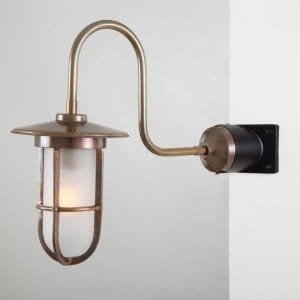
Corners present unique challenges in outdoor lighting. Standard wall lights designed for flat surfaces cannot mount properly on ninety-degree angles, leaving building corners dark and unwelcoming. Yet corners are precisely where illumination matters most—marking entrances, defining architectural boundaries, and ensuring safe navigation around buildings.
Modern corner lighting solutions transform these difficult spaces into design opportunities. IP65-rated fixtures withstand weather exposure while providing reliable illumination year-round. Whether lighting exterior building corners, bathroom corners requiring moisture resistance, or covered outdoor spaces, the right corner-mounted fixture combines practical function with architectural presence.
This guide explores corner lighting from technical requirements through design integration. You’ll learn about IP ratings for exposed positions, mounting solutions for ninety-degree angles, fixture types from traditional to contemporary, and how to select corner lights that enhance your property while meeting stringent performance demands.
- Why Corner Lighting Matters
- IP Ratings for corner positions
- corner mounting solutions
- traditional vs contemporary styles
- Mullan IP65 Corner lighting range
- Room by room applications
- installation considerations
- bulb selection and light quality
- design intergration
- quality & longevity
- weather resistance & maintenance
- planning your corner lighting
- traditional & heritage options
- getting started
- Shop for your corner lighting
Why Corner Lighting Matters
Building corners receive maximum exposure to weather, wind-driven rain, and temperature fluctuations. Standard outdoor lights positioned on flat walls benefit from some shelter, but corner-mounted fixtures face the elements from multiple directions. This exposure demands robust construction, proper IP ratings, and thoughtful installation to ensure lasting performance.
Beyond durability concerns, corners serve critical functional roles. Entrance corners guide visitors toward doorways while deterring intruders from shadowed approaches. Garden corners define boundaries and create depth in outdoor spaces. Porch and patio corners extend usable evening hours by providing targeted illumination exactly where needed.
Architectural corners also provide design opportunities. Well-chosen corner lights emphasize building lines, highlight materials like brick or render, and create visual interest through carefully positioned illumination. The right fixture becomes an architectural element itself, contributing to your property’s character day and night.
Safety considerations make corner lighting essential. Dark corners create trip hazards, obscure steps and level changes, and provide concealment for unwanted visitors. Proper corner illumination eliminates these risks while enhancing your property’s security presence without resorting to harsh floodlighting that disturbs neighbours.
IP Ratings for corner positions
Corner-mounted outdoor lights require minimum IP65 rating for reliable performance. The IP (Ingress Protection) rating indicates how well a fixture resists dust and moisture. The first digit addresses solid particle protection, the second liquid ingress. For corner positions, the second digit matters most.
IP44 rating provides splash resistance suitable for covered positions with some weather protection. Corner lights under deep eaves or within covered porches can function adequately with IP44 rating, though IP65 offers greater longevity even in protected locations. The modest price difference between ratings often justifies choosing the higher specification.
IP65 rating delivers comprehensive weather protection for fully exposed corner positions. The sealed construction prevents water jets from any direction entering the fixture, critical for corners facing prevailing winds or heavy rainfall. This rating suits exposed building corners, unsheltered patios, and any outdoor position without overhead cover.
Bathroom corners requiring moisture resistance benefit from IP65 fixtures originally designed for outdoor use. The same weather protection that guards against rain provides excellent defence against bathroom humidity and occasional splashing. This versatility makes quality IP65 corner lights suitable for both exterior positions and interior wet spaces.
The longevity advantage of proper IP rating extends beyond immediate weather protection. Fixtures with inadequate ratings for their position experience accelerated deterioration as moisture penetrates seals, corrodes internal components, and degrades bulb connections. Choosing appropriate IP rating from installation ensures years of reliable service without premature replacement.
You can check our IP44 or IP65 for Outdoor Lights Guide for more information
corner mounting solutions
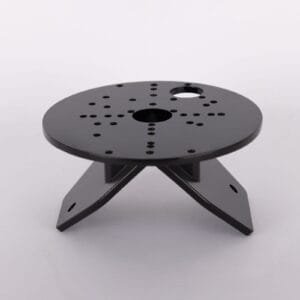
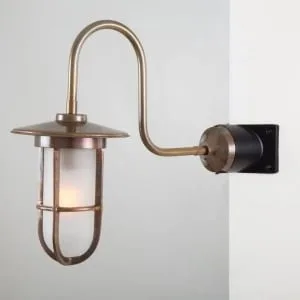
Mullan Corner Bracket with multiple fixing options
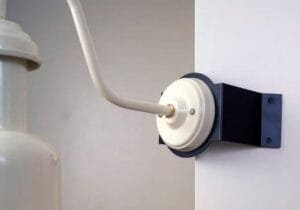
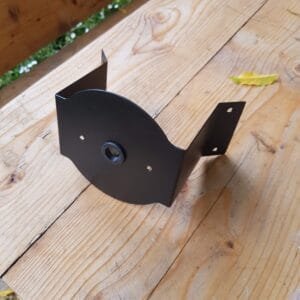
Burford Wall lights use the same fitting, in the same colour as the light.
Corner brackets provide the essential hardware for mounting standard wall lights on ninety-degree angles. These specialized plates accept normal wall brackets while positioning them correctly for corner installation. Multi-bored designs accommodate various bracket sizes, typically with 110mm diameter mounting plates matching most outdoor light fixtures.
Aluminium construction offers ideal balance between strength and weather resistance for corner brackets. The material withstands outdoor exposure without rusting, accepts powder-coat finishes in various colours to match or complement fixtures, and provides sufficient rigidity for secure mounting. Black finishes remain most popular as they recede visually, allowing the light fixture itself to dominate.
Installation of corner brackets requires careful attention to cable routing. The bracket positions the fixture several inches from the corner, necessitating longer cable runs than flat wall mounting. Planning cable paths before installation prevents complications later. Professional electricians can route cables through wall cavities or employ external conduit depending on wall construction and aesthetic preferences.
Some contemporary corner lights feature integral corner mounting without requiring separate brackets. These purpose-designed fixtures include angled backplates or adjustable mounting systems that position the light correctly on corner angles. While potentially more expensive than bracket-plus-fixture combinations, integrated designs offer cleaner aesthetics and simplified installation.
Symmetrical corner lighting—fixtures on adjacent walls near the corner—provides an alternative to corner mounting. This approach suits situations where true corner mounting proves impractical due to wall construction or architectural constraints. Twin lights either side of a corner create visual balance while avoiding mounting complications.
traditional vs contemporary styles
Traditional corner lighting draws inspiration from maritime, industrial, and heritage architectural sources. Fisherman’s lights with their characteristic domed shades and robust mounting arms suit coastal properties, harbour buildings, and any location embracing nautical aesthetic. These fixtures often feature painted finishes in colours like black, slate grey, or traditional dock green.
Stable and barn lights represent agricultural heritage adapted for contemporary use. Their straightforward construction and utilitarian aesthetic complement country properties, outbuildings, and rural settings where understated functionality matters more than decorative elaboration. These fixtures typically employ simple shades and sturdy brackets designed for exposed positions.
Burford and harbour styles embody British lighting heritage with lantern forms and traditional proportions. These fixtures suit period properties, cottages, and anywhere the owner values historical continuity over modern innovation. Available in various finishes, they adapt to specific property colours and materials while maintaining their classic character.
Contemporary corner lighting emphasizes clean lines, quality materials, and minimalist design language. Mullan Lighting’s IP65 range exemplifies this approach with precision-crafted brass and glass fixtures in multiple finishes from antique to polished. These designs suit modern properties, renovated period buildings, and architectural projects where lighting contributes to overall design coherence.
Industrial aesthetic bridges traditional and contemporary approaches. Fixtures with exposed construction, mechanical details, and honest materials appeal to both heritage enthusiasts and modern design sensibilities. The industrial look particularly suits loft conversions, urban properties, and spaces embracing raw materials like exposed brick, steel, and concrete.
Mullan IP65 Corner lighting range
Mullan Lighting crafts IP65-rated corner lights in their Irish factory with attention to detail that ensures lasting quality. The range encompasses multiple designs from simple dome forms to elaborate swan-neck configurations, all sharing robust construction and weather-resistant specifications suitable for fully exposed corner positions.
Brass construction forms the foundation of Mullan’s corner lighting approach. The material withstands weather exposure without degrading, accepts various finishes from antique to polished, and provides the structural integrity necessary for corner mounting. Hand-finished details and precision manufacturing ensure consistent quality across the range.
Glass shade options within the IP65 collection address different aesthetic and functional preferences. Clear glass showcases decorative bulbs while providing maximum light transmission. Opal glass diffuses illumination for softer ambient effect, particularly suitable for positions near seating areas or where glare reduction matters. The sealed glass-to-metal joints maintain IP65 rating while allowing glass replacement if required.
Finish variety allows coordination with existing hardware and architectural elements. Antique brass develops natural patina enhancing period properties. Polished brass offers bright, reflective presence for contemporary settings. Satin brass provides subtle sophistication. Matt black creates strong contrast against light walls. White finishes suit coastal and Scandinavian aesthetics. Natural brass begins bright and patinas beautifully over time.
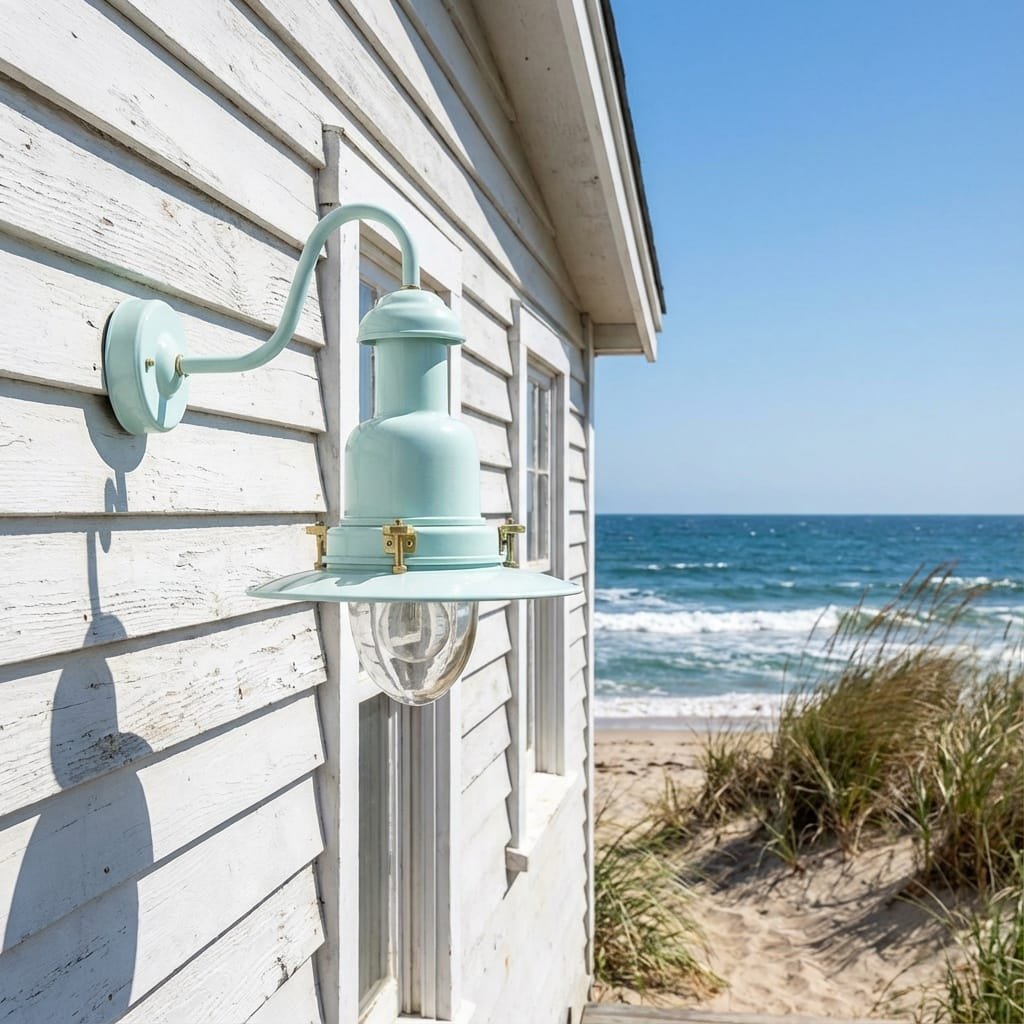
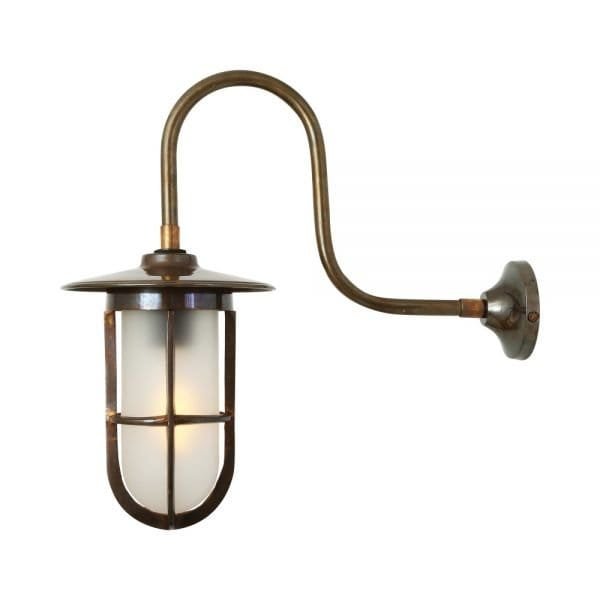
Swan-neck configurations provide adjustable light direction while maintaining corner suitability. The characteristic curved arm allows positioning the shade for optimal illumination patterns. This flexibility particularly benefits entrance corners where directing light toward doorways improves functionality and welcomes visitors.
The Mullan range’s versatility extends beyond outdoor corners to bathroom applications. The IP65 rating that protects against weather serves equally well in humid bathroom environments. This dual functionality makes these fixtures valuable for properties requiring consistent lighting aesthetic across both exterior and interior wet spaces.
Room by room applications
Building Entrances
Entrance corners benefit most from corner lighting as these positions guide visitors while establishing your property’s character. Fixtures flanking doorways or positioned on entrance corners create welcoming illumination that highlights architectural features while ensuring safe approach. Swan-neck designs directing light downward work particularly well as they illuminate doorways without creating glare for arriving guests.
Consider entrance lighting in relation to door hardware and architectural details. Matching or complementing metals between light fixtures and door furniture creates cohesion. Sizing matters too—substantial entrances suit larger fixtures while modest doorways benefit from more delicate lights that provide function without overwhelming the space.
Covered Patios and Porches
Corner positions in covered outdoor living spaces extend usable evening hours while defining the space’s boundaries. Fixtures with downward-directed light create pools of illumination suitable for dining, conversation, or quiet reading without the harsh glare of overhead lighting. IP65 rating provides peace of mind even under deep eaves where weather protection exists.
Dimming capability enhances patio corner lighting by allowing adjustment for different activities and times of evening. Early evening might require brighter illumination for dining, while later hours benefit from subdued lighting that creates ambience. Installing corner lights on dimmer switches or using dimmable LED bulbs provides this flexibility.
Garden Corners and Boundaries
Garden corners mark transitions between different areas—patio to lawn, formal garden to wild garden, entertaining space to private retreat. Corner lights positioned at these boundaries create gentle definition without harsh fencing or walls. Low-mounted fixtures work well for gardens as they illuminate pathways and planting without creating light pollution.
Warm-white LED bulbs in garden corner positions create inviting atmosphere while rendering plants and materials naturally. Avoid cool-white bulbs in gardens as they produce harsh, unflattering light that makes outdoor spaces feel unwelcoming. The 2700K to 3000K colour temperature range provides warm glow that enhances rather than fights evening ambience.
Outbuildings and Garages
Corner lighting on outbuildings, garages, and workshops combines security with functionality. Illuminated corners deter unwanted visitors while providing light for accessing buildings after dark. Motion sensors paired with corner lights offer energy-efficient security lighting that activates only when needed, though constant low-level illumination also has merit for properties requiring permanent presence.
Outbuilding corners often face maximum weather exposure as these structures typically lack the sheltering eaves of main buildings. IP65 rating becomes essential rather than optional for these positions. Robust mounting and quality construction ensure fixtures survive the harsh conditions common in exposed rural and coastal locations.
Bathrooms
Bathroom corners requiring moisture-resistant lighting benefit from outdoor-rated IP65 fixtures. The same weather protection that guards against rain provides excellent defence against bathroom humidity and splashing. Corner-mounted bathroom lights work particularly well in walk-in showers, above baths, and in powder room corners where standard wall lights might interfere with plumbing or fixtures.
Coordinate bathroom corner lights with other fixtures and hardware for cohesive design. Matching brass finishes between lights, taps, and cabinet hardware creates intentional design continuity. The versatility of fixtures suitable for both outdoor and bathroom use allows consistent lighting aesthetic throughout your property.
installation considerations
Professional electrical installation ensures safe, code-compliant corner lighting that performs reliably. Corner mounting presents unique challenges including cable routing through or around corner angles, achieving secure fixing in positions that may lack ideal wall support, and maintaining IP rating through proper cable entry and sealing.
Wall construction significantly affects installation approach. Solid brick or stone walls require drilling and plugging for secure fixture mounting. Cavity walls need locations that align with studs or blocking for adequate support. Timber-framed buildings offer different opportunities and constraints. Discussing wall construction with your electrician during planning prevents complications during installation.
Cable entry points require particular attention for corner positions. The IP65 rating depends partly on proper cable gland installation that prevents moisture entering through electrical connections. Quality fixtures include appropriate cable entries, but correct installation technique remains crucial. External conduit provides one solution for situations where internal cable routing proves impractical.
Weatherproof electrical boxes designed for outdoor use provide secure cable connections behind fixtures. These boxes accommodate junction points while maintaining weather resistance. Positioning boxes to allow adequate clearance for fixtures while providing access for future maintenance requires careful planning before installation commences.
Consider future bulb replacement when positioning corner lights. While LED bulbs last thousands of hours, eventual replacement remains necessary. Mounting fixtures at accessible heights simplifies maintenance. For higher positions, planning access via ladders or scaffolding during installation helps anticipate future service requirements.
Timing installation to coordinate with other building work often proves efficient. If undertaking external painting, pointing, or other facade work, installing corner lights during this period allows coordinated cable routing, colour matching, and single-stage completion. Fresh paint or render can seal around new installations creating weathertight integration.
bulb selection and light quality
LED technology dominates outdoor corner lighting due to its longevity, energy efficiency, and minimal heat generation. Modern LED bulbs suitable for outdoor fixtures last 15,000 to 25,000 hours—potentially a decade of nightly use—while consuming fraction of the energy required by traditional bulbs. This efficiency particularly benefits corner lights that often operate on dusk-to-dawn schedules.
Colour temperature profoundly affects outdoor lighting ambience. Warm white (2700K to 3000K) creates inviting atmosphere suitable for entrances, patios, and garden corners. This colour temperature renders materials and planting naturally while contributing to evening relaxation. Neutral white (3500K to 4000K) suits functional applications like garage corners or workshop lighting where task visibility matters more than ambience.
Avoid cool white (5000K+) bulbs in corner lights for residential properties. This harsh colour temperature produces unflattering illumination that makes outdoor spaces feel institutional rather than inviting. Reserve cool white for commercial or industrial applications where colour rendering takes lower priority than maximum visibility.
Bulb size constraints apply to many outdoor corner lights due to the sealed construction required for IP65 rating. Fixtures specify maximum bulb dimensions and wattage limits—typically 6.5 watts LED with specific diameter and length restrictions. Exceeding these specifications compromises both IP rating and fixture longevity. Always verify bulb compatibility before purchase.
Dimmable LED bulbs paired with compatible dimmer switches provide lighting flexibility for corner positions. Entrance corners might benefit from bright illumination during active evening hours, reduced intensity later for security presence without light pollution. Patio corners can adjust from dining brightness to ambient glow as the evening progresses. Not all LED bulbs dim smoothly, so selecting quality dimmable bulbs ensures satisfactory performance.
CRI (Colour Rendering Index) affects how accurately outdoor lighting displays colours. For corners near seating areas, entrances where you greet visitors, or gardens where planting colour matters, select bulbs with CRI of 90 or above. This specification ensures colours appear natural and accurate rather than distorted by poor-quality light.
design intergration
Corner lighting should integrate thoughtfully with your property’s overall lighting scheme rather than existing in isolation. Consider how corner lights relate to other outdoor fixtures, entrance lighting, and even interior lights visible through windows. Consistency in finish, style, and light quality creates cohesion that elevates your property’s entire lighting design.
Matching or complementing metals between corner lights and other hardware strengthens design unity. If your property features brass door furniture, gutters, and window frames, brass corner lights reinforce this material language. Alternatively, deliberate contrast—black fixtures against white walls, for instance—creates intentional drama that can equally succeed when executed confidently.
Scale matching matters particularly for corner lights as their position often makes them prominent architectural elements. Large corner lights suit substantial buildings with strong architectural presence. Delicate fixtures work better on cottages, modest homes, and properties with refined rather than robust character. When uncertain, slightly smaller often succeeds better than oversized fixtures that dominate corners inappropriately.
Symmetry versus asymmetry offers design choice in corner lighting. Matching fixtures on opposite building corners creates formal balance suitable for traditional architecture and symmetrical facades. Asymmetrical approaches—different fixtures on different corners—can work for informal properties, additions with varied character, or contemporary designs embracing intentional irregularity.
Layered lighting design treats corner lights as one component within comprehensive outdoor illumination. Combine corner fixtures with path lighting, step illumination, accent lighting for trees or features, and general area lighting to create depth and interest. This layered approach provides both functional coverage and atmospheric evening ambience.
Consider daytime appearance when selecting corner lights. Fixtures remain visible during daylight hours, contributing to your property’s character even when unlit. Quality construction, appropriate scale, and finish coordination ensure corner lights enhance your building’s appearance day and night rather than appearing as awkward additions tolerated for their evening function.
quality & longevity
Exposed corner positions demand fixtures built to withstand harsh conditions over decades rather than years. Quality construction begins with material selection—solid brass resists corrosion indefinitely, cast aluminium provides strength without excessive weight, and quality glass withstands thermal shock and impact. Cheap fixtures using thin materials or inferior plating fail quickly in exposed positions.
Mullan Lighting’s Irish manufacturing prioritizes longevity through considered design and skilled craftsmanship. Each fixture receives individual attention during production ensuring consistent quality. The brass components are cast and finished by craftspeople who understand how small details affect both appearance and durability. This attention produces lighting that functions reliably for decades.
Sealed construction maintaining IP65 rating throughout the fixture’s life requires precision manufacturing. Gasket quality, glass-to-metal joints, and cable entry seals all contribute to weather resistance. Inferior seals degrade within years, allowing moisture penetration that corrodes internal components. Quality fixtures maintain their IP rating through proper material selection and manufacturing precision.
Replaceable components extend fixture longevity. Glass shades occasionally break due to accidents or extreme weather. Fixtures designed with replaceable glass allow repair rather than complete replacement. Similarly, serviceable electrical components mean fixtures can receive updated wiring or fittings if necessary after decades of service, keeping them functional long after lesser alternatives reach landfill.
The investment in quality corner lighting divides across decades of service, making initial cost less significant than it first appears. A quality brass fixture costing £200 and lasting thirty years costs £6.67 annually. A cheap alternative at £50 lasting five years before requiring replacement ultimately costs £10 annually while providing inferior light quality and appearance throughout its brief service.
Environmental considerations favour quality, long-lasting fixtures over cheap disposable alternatives. Manufacturing and shipping lighting fixtures carries environmental cost. Buying once and keeping fixtures for decades minimizes this impact. Quality fixtures also perform better over time—cheap alternatives often lose light output or develop problems that reduce their effectiveness long before complete failure.
weather resistance & maintenance
British weather challenges outdoor lighting with rain, wind, salt air in coastal areas, frost, and dramatic temperature fluctuations. IP65-rated fixtures withstand these conditions through sealed construction, but installation quality affects long-term performance equally. Proper mounting ensuring water drains away from electrical connections, correct cable gland installation, and secure mechanical fixing all contribute to weather resistance.
Coastal properties face additional corrosion challenges from salt-laden air. Solid brass construction provides superior salt resistance compared to plated alternatives where any breach in plating allows accelerated corrosion. Regular rinsing of fixtures in coastal locations—simply hosing them down quarterly—removes salt accumulation before it causes damage. This minimal maintenance significantly extends fixture life in harsh maritime environments.
Maintenance requirements for quality corner lights remain modest. Annual cleaning removes accumulated dirt and spider webs that reduce light output. Switch off power before cleaning, use soft cloths rather than abrasive materials, and avoid harsh chemicals that might damage finishes. This simple maintenance keeps fixtures looking good and functioning optimally.
LED bulbs in corner lights typically last 15,000 to 25,000 hours. Given evening-only use averaging perhaps four hours daily, bulbs can last a decade before replacement becomes necessary. When replacing bulbs, verify specifications match original bulbs—correct wattage, base type, and dimensions. Incorrect bulbs can damage fixtures or compromise IP rating.
Brass finishes develop patina naturally over time, particularly in coastal or industrial environments. Some owners appreciate this aging as it adds character and authenticity. Others prefer maintaining original finish through occasional cleaning with specialized brass polish. Either approach succeeds provided it aligns with owner preference and property aesthetic.
Check mounting security annually, particularly after severe weather. While quality fixtures with proper installation remain secure, verifying that mounting screws haven’t loosened and brackets remain solid prevents fixtures working loose over time. This quick check takes minutes and prevents problems requiring more extensive repair later.
planning your corner lighting
Effective corner lighting begins with comprehensive assessment of your property. Walk around at dusk noting which corners remain dark, where illumination would improve safety or function, and which corners could benefit from architectural highlighting. Photograph these positions during daylight for reference when selecting fixtures.
Consider existing electrical infrastructure when planning corner lighting. Corners near existing exterior outlets or close to interior electrical circuits simplify installation and reduce cost. Corners distant from power sources require longer cable runs, potentially exterior conduit, and greater installation expense. This doesn’t mean avoiding such positions, merely factoring installation reality into planning.
Prioritize corner positions based on function and budget. Entrance corners typically warrant highest priority as they serve critical welcoming and security functions. Patio corners used frequently for evening entertaining merit attention. Garden corners providing architectural accent might follow. Workshop or outbuilding corners, while functionally important, often accept simpler fixtures than prominent house corners.
Mock up proposed fixtures before committing to purchase. Many suppliers allow returns, enabling you to trial fixtures in position. Alternatively, photograph corners and use simple photo editing to visualize how different fixture sizes and styles would appear. This visualization prevents costly mistakes from choosing inappropriately scaled or styled fixtures.
Budget realistically for both fixtures and installation. Professional electrical work forms significant portion of corner lighting cost, particularly for new installations requiring cable runs. However, this investment provides safe, code-compliant installation that functions reliably for decades. Attempting DIY electrical work on outdoor installations risks both immediate danger and long-term performance problems.
Consider how corner lighting fits within phased property improvement. Perhaps addressing entrance corners now while planning garden corners for next year allows spreading cost while making immediate impact where it matters most. Quality fixtures remain available, so purchasing different corners at different times doesn’t risk inconsistency.
traditional & heritage options
Fisherman’s lights represent maritime heritage adapted for contemporary use. These robust fixtures originated in dock and harbour applications where durability and reliable performance in harsh conditions mattered more than decorative elaboration. The characteristic domed shade, sturdy mounting bracket, and straightforward construction translate beautifully to residential corner applications.
Available finishes for fisherman’s lights typically include traditional colours: black remains most popular for its versatility and ability to complement any facade colour. Slate grey offers subtle variation while maintaining conservative character. White or Seaspray blue suits coastal properties and Scandinavian aesthetics. These heritage fixtures accept corner brackets easily, making them practical choices for corner positions.
Stable and barn lights emphasize functional simplicity suited to agricultural buildings, outbuildings, and rural properties. Their uncomplicated design and robust construction withstand exposed positions while avoiding pretension. These fixtures work particularly well on buildings where lighting serves primarily functional rather than decorative purposes—garages, workshops, barns, and utility buildings.
Burford-style lights embody traditional British outdoor lighting with lantern forms and classical proportions. These fixtures suit period properties, cottages, and anywhere the owner values historical continuity. While perhaps best known through heritage stockists, quality Burford lights adapt well to corner mounting with appropriate brackets. They provide traditional aesthetic for owners prioritizing period authenticity.
The choice between traditional heritage styles and contemporary designs reflects personal preference and property character. Period buildings gain from fixtures respecting their historical context. Modern properties benefit from contemporary lighting that complements clean lines and minimalist design language. Mixed-period properties allow more flexibility, potentially combining fixture styles in different locations based on building phase and character.
getting started
Begin corner lighting projects by documenting current conditions. Photograph all corners during both daylight and evening hours. Note which corners require illumination for safety, function, or aesthetics. Measure distances from potential fixture positions to existing electrical supply. This documentation provides foundation for planning and communicating requirements to electricians or suppliers.
Request quotes from qualified electricians early in planning. Explain your corner lighting goals, show photographs, and discuss fixture types you’re considering. Electricians can advise on practical constraints, cable routing options, and realistic installation timelines. Multiple quotes allow comparison while ensuring you select an electrician with appropriate experience in outdoor installations.
Consider fixture finish and style in relation to existing hardware and architectural elements. Take samples of door furniture, window frames, or other metalwork when visiting lighting suppliers. This ensures selected corner lights coordinate properly. Photographs of your property help suppliers suggest appropriate fixture scales and styles for your specific situation.
Order fixtures allowing adequate time for delivery and any customization. Quality manufacturers often require several weeks for production, particularly for less common finishes or custom specifications. Rushing orders increases cost and limits options. Planning ahead ensures you receive exactly the fixtures you want rather than settling for immediately available alternatives.
Schedule installation to coordinate with other building work when practical. If planning external painting, rendering, or other facade work, installing corner lights during this period allows coordinated integration. Fresh finishes can seal around new fixtures. Colour selection can accommodate new lighting. Single-phase completion prevents multiple disruptions.
Allow realistic timelines for corner lighting projects. From initial planning through installation and commissioning, expect several months for comprehensive projects. Entrance corners as quick wins might complete within weeks, but multiple corner positions, custom fixtures, or complex installations require patience. Quality results justify the time invested.
FREQUENTLY ASKED QUESTIONS
What IP rating do I need for fully exposed outdoor corners?
IP65 minimum for corners without overhead protection. This rating provides comprehensive weather resistance against wind-driven rain from any direction. IP44 suffices only for corners under deep eaves with significant shelter, though IP65 offers better longevity even in protected positions.
Can I use outdoor corner lights in bathrooms?
Yes—IP65 outdoor corner lights work excellently in bathrooms. The weather protection that guards against rain provides excellent defence against bathroom humidity and splashing. This versatility allows consistent lighting aesthetic between outdoor corners and bathroom wet areas.
Do I need special brackets for corner mounting?
Most corner lights require corner brackets positioning the fixture correctly on ninety-degree angles. Purpose-designed corner brackets accept standard wall light backplates while angling them appropriately. Some contemporary fixtures include integral corner mounting without requiring separate brackets.
We supply 2 types of corner brackets, Burford bracket fits all J D Burford wall lights in matching colours. Mullan brackets suit Mullan lights.
What’s the best finish for corner lights on brick buildings?
Antique or satin brass complements warm brick tones beautifully while developing attractive patina. Matt black provides strong contrast particularly effective on painted brick. Natural brass begins bright and develops patina matching brick aging. Consider existing door and window hardware when selecting finish.
How high should corner lights mount on building corners?
Typical mounting height ranges from 1.8m to 2.5m depending on fixture purpose and ceiling heights. Entrance corners often suit higher mounting creating welcoming illumination. Patio corners might mount lower for more intimate scale. Ensure adequate height for head clearance while maintaining effective light distribution.
Can corner lights operate on motion sensors?
Yes—motion sensors provide energy-efficient operation for corner lights, particularly on outbuildings or positions requiring security lighting. Constant low-level illumination suits entrance corners better as it provides continuous welcome and presence. Consider your priorities when deciding between constant and sensor operation.
What colour temperature works best for outdoor corner lights?
Warm white (2700K to 3000K) creates inviting ambience suitable for entrances, patios, and garden corners. This colour temperature renders materials naturally while contributing to evening atmosphere. Reserve neutral white (3500K to 4000K) for functional applications like workshops where task visibility matters more than ambience.
How long do LED bulbs last in outdoor corner lights?
Quality LED bulbs in outdoor fixtures typically last 15,000 to 25,000 hours. Given evening-only use averaging four hours daily, expect roughly a decade before replacement becomes necessary. Always replace with bulbs matching original specifications—correct wattage, base type, and dimensions maintain fixture performance and IP rating.
Do brass corner lights require special maintenance?
Minimal maintenance beyond annual cleaning to remove dirt and salt accumulation in coastal areas. Brass develops natural patina over time which many owners appreciate. Those preferring to maintain original bright finish can periodically clean with brass polish, though this remains optional rather than necessary.
Can I mix different corner light styles on one building?
Yes, though thoughtful coordination improves results. Properties with distinct sections—original building plus extension, for instance—can successfully employ different styles reflecting each area’s character. Ensure some design continuity through finish, scale, or light quality even when varying fixture style.
Shop for your corner lighting
Browse our complete collection of corner-mounted outdoor lights including IP65-rated Mullan fixtures handcrafted in Ireland and traditional heritage styles. Each fixture combines weather resistance, quality construction, and thoughtful design for lasting performance in exposed corner positions.
Premium Mullan IP65 Range: Contemporary brass and glass corner lights in multiple finishes—antique brass, polished brass, satin brass, matt black, white, and natural brass. Suitable for outdoor corners and bathrooms. Handcrafted in Ireland with attention to detail ensuring decades of reliable service.
Traditional Heritage Options: Fisherman’s lights, stable and barn fixtures, and Burford-style corner lights providing classic aesthetic for period properties and traditional designs. Available in heritage colours including black, slate grey, and green.
Corner Mounting Solutions: Outdoor corner brackets in durable aluminium construction, multi-bored for versatile installation. Black powder-coat finish allows fixtures to dominate while brackets recede appropriately.
Every fixture available with multiple finish options to coordinate with your property’s hardware and architectural elements. Professional installation recommended for safe, code-compliant operation and optimal performance.
Related Items;
- IP Rating Guide for Outdoor Lighting
- How to Light Building Entrances
- Bathroom Lighting with IP65 Fixtures – Wall & Ceiling
- Brass Finishes Explained: Antique, Polished, and Satin
- Outdoor Lighting Maintenance Guide