5 Creative Ways to Style Wooden Lighting in Your Home
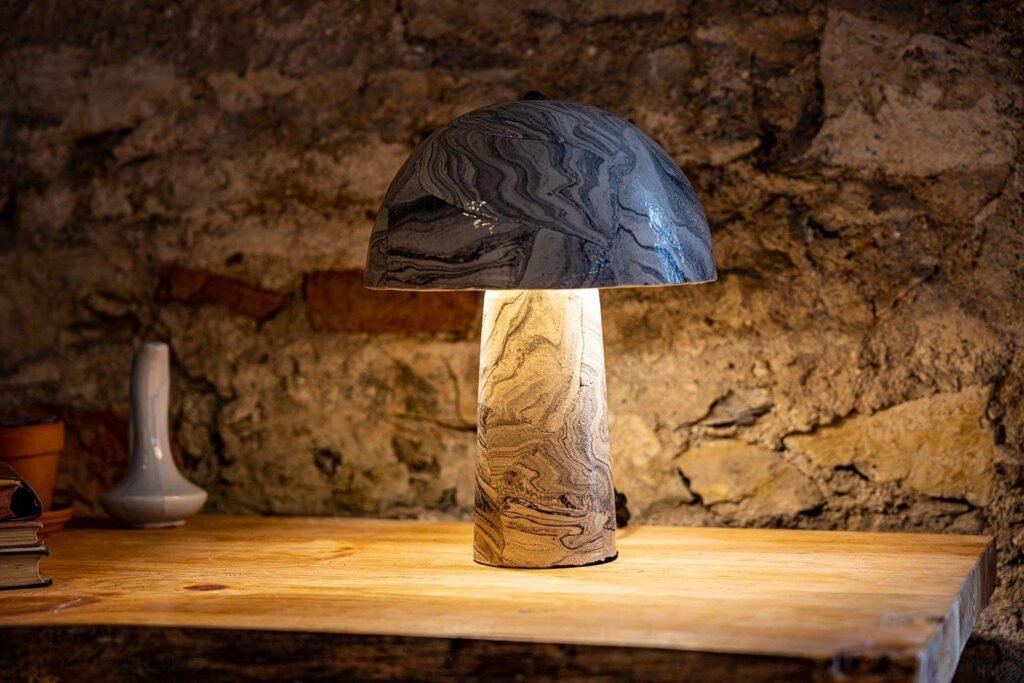
Wooden lighting fixtures bring natural warmth and timeless appeal to any interior, but knowing how to style them effectively can transform good design into exceptional spaces. Whether you’re working with wooden pendant lights, wall sconces, or accent lamps, these five styling strategies help you maximize the impact of wooden lighting throughout your home.
From creating Scandinavian hygge atmospheres to mixing wood tones for depth and interest, these practical tips ensure your wooden lighting enhances rather than overwhelms your interior design.
1. Create Hygge Atmosphere with Layered Wooden Lighting
The Danish concept of hygge centers on creating cozy, comfortable spaces that promote wellbeing and contentment. Wooden lighting is fundamental to achieving authentic hygge atmosphere, but the secret lies in layering multiple light sources rather than relying on single overhead fixtures.
The Hygge Layering Formula
Start with wooden pendant lights as your primary ambient lighting. Position these ceiling fixtures to provide general illumination without harsh brightness. Choose designs with warm wood tones and diffused light output that creates soft, enveloping brightness rather than stark task lighting.
Add wooden wall sconces at eye level to introduce secondary light sources that create depth and visual interest. Wall-mounted wooden lights cast gentle pools of light that highlight architectural features while contributing to overall ambiance. Position them flanking artwork, beside mirrors, or along hallways to guide movement through spaces.
Complete your hygge lighting layers with wooden table lamps and floor lamps that provide intimate, adjustable lighting. These portable fixtures allow you to customize lighting throughout the day, supporting reading, conversation, or relaxation as needs change.
Practical Hygge Lighting Application
In living rooms, combine a wooden pendant light or semi-flush ceiling fixture with wooden wall sconces beside the sofa and a wooden floor lamp in a reading corner. This three-level approach ensures no harsh shadows while creating the cozy, embracing light quality essential to hygge design.
Install dimmer switches throughout to adjust lighting intensity. Hygge lighting should never feel bright or clinical—keep light levels low enough to encourage relaxation while remaining adequate for comfortable activity. Warm white LED bulbs (2700K-2900K) enhance hygge atmosphere by complementing wood’s natural warmth.
2. Mix Wood Tones and Finishes for Visual Depth
Many people worry about mixing different wood tones, fearing rooms will appear mismatched or chaotic. The truth? Mixing wood tones adds richness, depth, and authenticity to interiors. Spaces with only one wood tone often feel flat and overly coordinated, while thoughtfully mixed woods create sophisticated, collected-over-time aesthetics.
Guidelines for Mixing Wooden Lighting
Choose a dominant wood tone for your primary wooden lighting fixtures—this becomes your anchor tone. Select secondary wooden lighting pieces in complementary tones that vary in either lightness or warmth. For example, if your main wooden pendant lights feature medium oak tones, add darker walnut wall sconces or lighter birch table lamps.
Balance warm and cool wood undertones throughout your space. Woods like pine, oak, and teak have warm golden or reddish undertones, while ash, maple, and birch tend toward cooler gray tones. Mixing both categories creates balanced, dynamic schemes that feel intentional rather than accidental.
Distribute your wood tones throughout the room rather than clustering similar tones together. If you have light wood pendant lights above your dining table, position darker wood sconces on adjacent walls rather than matching light wood fixtures beside the table.
Mixing Wood with Other Materials
Wooden lighting gains impact when paired with contrasting materials. Combine wooden pendant lights with metal accents, glass elements, or ceramic fixtures to create visual variety. A wooden pendant light with brass hardware introduces warmth-on-warmth layering, while wood paired with matte black metal offers striking contrast.
In kitchens, wooden pendant lights beautifully offset stainless steel appliances and stone countertops, softening harder industrial elements. In bedrooms, wooden lighting complements linen textiles and woven baskets, creating cohesive natural material palettes.
3. Use Wooden Lighting to Define Zones in Open-Plan Spaces
Open-plan living presents unique design challenges—how do you define distinct areas without physical walls? Wooden lighting provides elegant solutions, creating visual boundaries and establishing individual zone identities within flowing spaces.
Kitchen and Dining Zone Definition
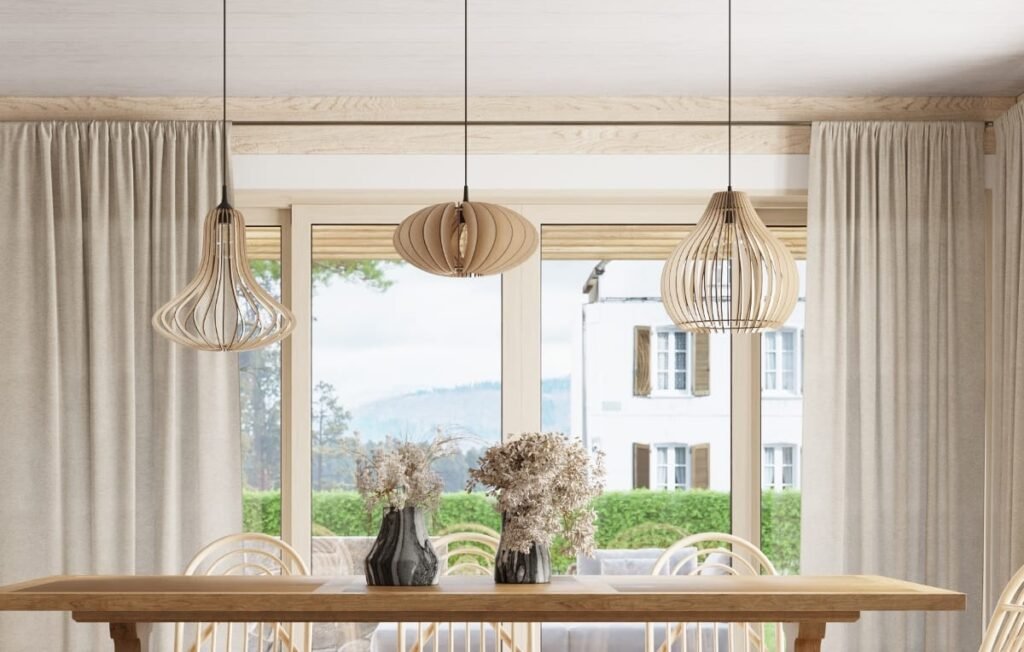
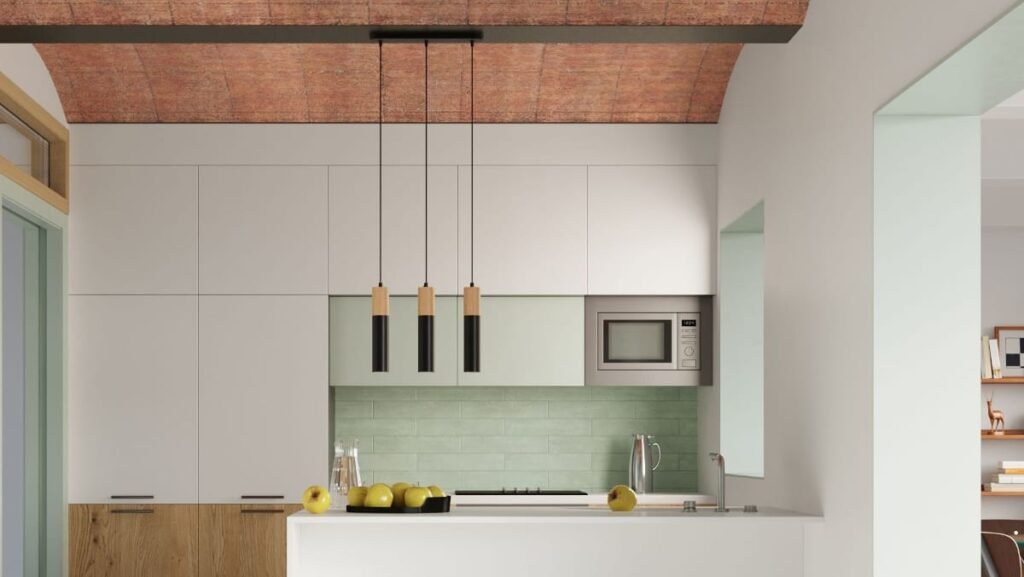
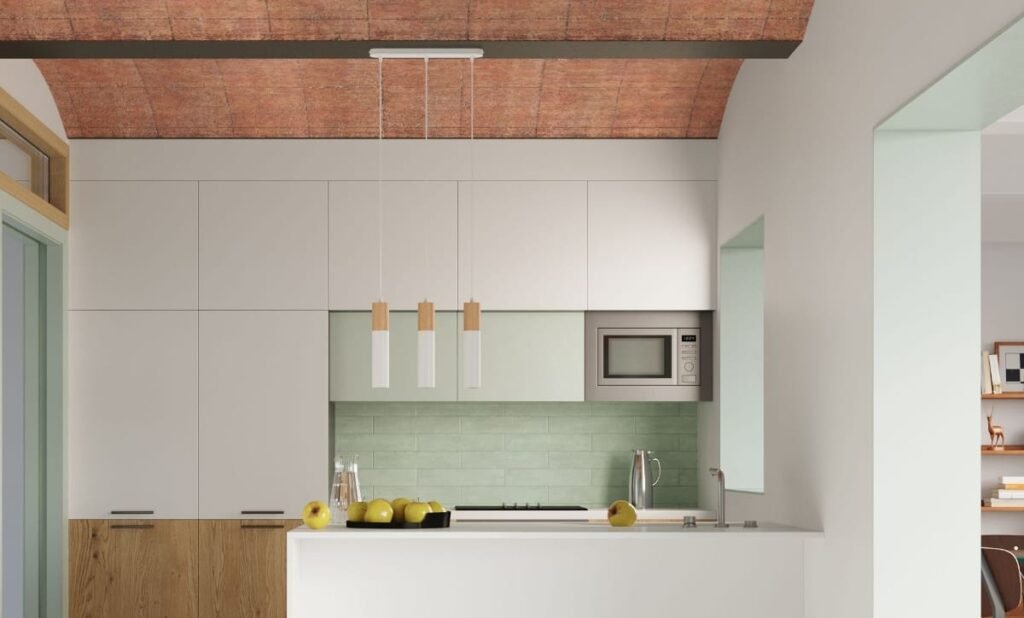
In open-plan kitchen-dining areas, use wooden pendant lights to clearly delineate separate functions. Install a series of matching wooden pendants above your kitchen island to establish the cooking zone, then switch to a different style—perhaps a larger statement wooden pendant or chandelier—above the dining table. The change in lighting style signals the transition from food preparation to dining and gathering.
This approach works particularly well when combining different scales of the same wood tone. Small geometric wooden pendants above the island paired with a larger organic wooden pendant above the dining table maintains material consistency while creating clear zone distinction.
Living and Working Area Separation
As more homes incorporate work-from-home spaces, defining boundaries between living and working areas becomes crucial. Position focused wooden desk lamps or directional wooden spotlights in home office zones, contrasting with softer ambient wooden pendant lights or floor lamps in relaxation areas. The difference in lighting style and intensity subconsciously signals functional separation even within unified rooms.
Creating Conversation Areas
Use wooden lighting to establish intimate conversation zones within larger living spaces. A wooden floor lamp beside a reading chair and wooden wall sconces flanking a sofa create cozy pockets within open areas. These pools of light naturally draw people to gather, defining social zones without physical barriers.
4. Highlight Architectural Features with Strategic Wooden Lighting
Wooden lighting fixtures serve double duty—they’re both light sources and architectural elements themselves. Position them strategically to enhance your home’s best features while the fixtures themselves become focal points.
Emphasizing Ceiling Height
In rooms with high ceilings, dramatic wooden pendant lights draw the eye upward, emphasizing vertical space and creating grandeur. Choose substantial fixtures that maintain presence even when viewed from floor level. Long drop lengths and larger shades ensure pendants don’t disappear into expansive ceiling heights.
Conversely, in rooms with standard ceiling heights, select appropriately scaled wooden pendants that enhance rather than overwhelm. Flush or semi-flush wooden ceiling lights work beautifully in spaces where pendant drops would feel cramped.
Showcasing Exposed Beams
Wooden lighting and exposed wooden beams create powerful design partnerships. The shared material creates cohesive aesthetics while the contrast between structural beams and decorative lighting adds visual interest. Position wooden pendant lights to hang between beams, using the beams to frame fixtures and create rhythmic patterns across ceilings.
In rooms with wooden beam ceilings, consider wood tones that complement rather than exactly match. If beams are dark reclaimed wood, lighter natural wood pendants provide beautiful contrast while maintaining material harmony.
Framing Architectural Openings
Use wooden wall sconces to frame doorways, windows, or archways, drawing attention to these architectural elements while providing functional lighting. Symmetrically placed wooden sconces flanking doorways create formal, balanced compositions, while asymmetric placement adds contemporary edge.
Illuminating Stairways
Stairways benefit enormously from wooden lighting that provides both safety illumination and aesthetic appeal. Install wooden wall sconces along stairway walls, spacing them consistently to light each flight adequately. Wooden pendant lights in stairwells with high ceilings become dramatic focal points visible from multiple floors.
5. Coordinate Wooden Lighting with Natural Elements and Textures
Wooden lighting shines brightest when integrated into broader natural material palettes. Strategic coordination with other organic elements creates cohesive, biophilic interiors that promote wellbeing and connection to nature.
Pairing Wood with Living Plants
Indoor plants and wooden lighting form natural partnerships, both bringing organic elements into built environments. Position wooden pendant lights above plant displays to highlight greenery while the combination reinforces biophilic design principles. The warm glow of wooden lights enhances plant colors, making foliage appear more vibrant and healthy.
Consider wooden pendant lights with open, airy designs that won’t compete with plants for visual attention. Wooden lights that cast interesting shadow patterns add additional organic shapes to plant displays, creating dynamic layered compositions.
Combining Wood with Natural Textiles
Wooden lighting complements natural textile elements—linen curtains, wool throws, cotton cushions, jute rugs. These materials share similar color palettes and tactile qualities, creating unified sensory experiences. The combination feels grounded and authentic, avoiding the coldness of spaces dominated by synthetic materials.
In bedrooms, wooden pendant lights or wall sconces paired with linen bedding and wool blankets create serene, hygge-inspired sanctuaries. The layered natural materials work together to promote relaxation and restful sleep.
Integrating Stone and Wood Elements
Wood and stone represent complementary natural materials that enhance each other when paired thoughtfully. Wooden pendant lights above stone countertops in kitchens create beautiful material dialogue—wood’s warmth balances stone’s coolness. In bathrooms, wooden wall sconces alongside stone tile or natural stone sinks bring warmth to spaces that can feel cold and hard.
This combination works particularly well in Scandinavian-inspired interiors, where mixing natural materials creates authentic Nordic aesthetics rooted in landscape and climate.
Wood and Metal Combinations
While wood is the star, don’t overlook opportunities to incorporate metal accents. Many wooden pendant lights feature brass, copper, or matte black metal hardware that adds visual interest and contemporary edge. These metal touches bridge wooden lighting with metal cabinet hardware, faucets, or furniture legs, creating intentional design cohesion.
Warm metals like brass and copper complement wood’s natural warmth, creating rich, layered aesthetics. Cooler metals like brushed nickel or matte black provide striking contrast that highlights wood’s organic character.
Practical Styling Tips for Any Space
Scale Matters
Wooden lighting fixtures must relate proportionally to room size and surrounding elements. Oversized wooden pendants overwhelm small spaces, while undersized fixtures disappear in large rooms. Measure your space, consider ceiling height, and select fixtures that feel substantial without dominating.
Consider Light Quality
How wood filters and diffuses light affects overall atmosphere. Solid wooden shades create dramatic uplighting and downlighting, while open wooden structures cast intricate shadow patterns. Slatted or perforated wooden designs distribute light more evenly throughout spaces. Choose designs based on desired lighting effects—focused task lighting, ambient mood lighting, or dramatic accent lighting.
Maintain Sight Lines
Position wooden pendant lights carefully to avoid obstructing important sight lines. In dining areas, ensure pendants don’t block eye contact across tables. In kitchens, confirm pendant positions don’t interfere with cabinet doors or create head-bump hazards at work areas.
Create Balance, Not Symmetry
While symmetrical wooden lighting placement works beautifully in formal spaces, don’t feel constrained by perfect symmetry. Balanced asymmetry—arranging elements with visual weight distribution rather than mirror placement—creates dynamic, contemporary interiors. Three wooden pendants of varying sizes, for instance, can feel balanced without being symmetrical.
Bringing It All Together
Styling wooden lighting successfully involves understanding how fixtures interact with surrounding elements, lighting layers, and overall interior aesthetics. By creating hygge atmospheres through layered lighting, mixing wood tones for depth, defining zones in open spaces, highlighting architectural features, and coordinating with natural materials, you’ll transform wooden lighting from simple fixtures into integral design elements that enhance your home’s beauty and functionality.
Ready to incorporate wooden lighting into your home? Explore our collection of modern wooden pendant lights, wooden wall sconces, and wooden ceiling lights to find pieces that suit your styling vision. Our range includes designs perfect for creating hygge atmospheres, mixing materials, and highlighting your home’s best features.
Need inspiration or advice on styling wooden lighting in your specific space? Our team at Great Lighting UK is here to help you create beautiful, well-lit interiors that celebrate natural materials and timeless design.
Free UK delivery on orders over £60